

















The PachiPanda Challenge and Africa’s Rising Eco-Innovation Leaders: 2025 Edition



Nourishing Tomorrow: Innovations for Food, Energy, and Water Security
Across Africa, a new generation of eco-entrepreneurs is proving that innovation rooted in local realities can unlock continental transformation. Guided by the 2025 theme, “Nourishing Tomorrow: Innovations for Food, Energy, and Water Security, the 2025 Africa PachiPanda Challenge has once again illuminated the extraordinary potential of young Africans designing solutions local environmental challenges. By placing youth-led innovation at the centre of climate action, the Challenge contributes to building Africa’s green economy and accelerating inclusive, low-carbon growth.
Africa is the youngest continent in the world, yet its youth remain among the most vulnerable to climate shocks, unemployment and systemic inequality. At the same time, they are powerful agents of change – closest to the challenges, deeply invested in their communities, and uniquely positioned to shape sustainable solutions. MTN recognises that empowering young people is both a social imperative and a critical driver of long-term sustainability and resilience across the continent.
Designed to empower Africa’s next generation of environmental leaders, the Africa PachiPanda Challenge equips young eco-innovators aged 18–35 with the tools, mentorship and networks needed to scale climate-smart solutions. Through this initiative, MTN, together with World Wide Fund (WWF) and others, reinforces its commitment to supporting ideas that deliver lasting value for the environment and local communities. While Africa contributes the least to global greenhouse-gas emissions, it is disproportionately affected by climate change. MTN believes that those most impacted must be at the centre of designing solutions, and that digital connectivity, entrepreneurship and access to markets are critical enablers of a just and inclusive green transition.
The programme continues to grow in both reach and impact. Since its inception, the continental edition has expanded from Zambia, South Africa, Nigeria and Cameroon in 2024 to now include Uganda in 2025, further strengthening regional collaboration and deepening its pan-African footprint. Applications have increased by approximately 35–40%, and the number of eco-entrepreneurs developed through structured training, mentorship and pitch preparation has almost doubled to more than 150 participants across participating markets.
For MTN, PachiPanda demonstrates how digital connectivity and targeted partnerships can strategically enable scalable green enterprises, strengthen local innovation ecosystems and deliver shared value across markets, while positioning MTN as a credible catalyst of Africa’s green economy and equipping youth innovators to attract capital, partnerships and policy-relevant exposure beyond the programme. The 2025 OpCo champions exemplify how creativity, technology and purpose can converge to solve pressing environmental challenges.
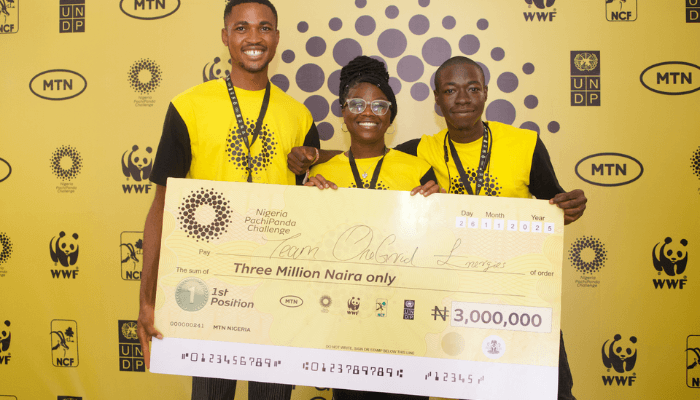
In Nigeria, OneGrid Energies is tackling pollution while expanding access to clean energy in underserved communities. By upcycling waste plastic bottles and used lithium-ion batteries into affordable lanterns, the innovation reduces environmental harm while meeting essential household lighting needs. This circular approach is strengthened by solar-powered charging stations operated by rural women, creating local energy hubs that combine environmental impact with economic empowerment.
In South Africa, CarbonSmart Solutions Africa, founded by Wendile Mpofu, is reimagining sustainable agriculture by helping smallholder farmers improve soil health while earning verified carbon credits. Using biochar and advanced digital monitoring tools supported by IoT technology, the enterprise enables transparent measurement of carbon sequestration. Its intuitive app gives farmers access to soil data, training and carbon market insights, creating an inclusive pathway for rural communities to benefit from global climate finance.
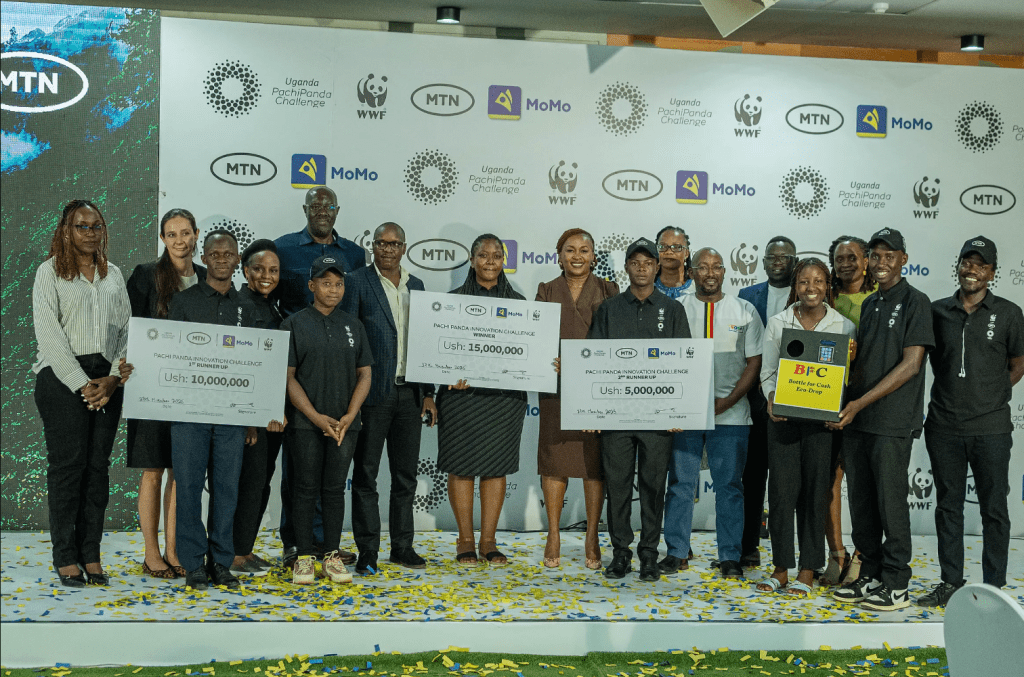
Uganda’s FarmGate Digital, led by Ruth Kyobutungi, is transforming food security through data-driven agriculture. The platform aggregates real farm-gate prices from local markets and provides predictive insights that help farmers plan when to harvest, store and sell their produce. By reducing income losses, preventing food spoilage and improving market transparency, FarmGate strengthens food systems while promoting more efficient and environmentally responsible agricultural practices.
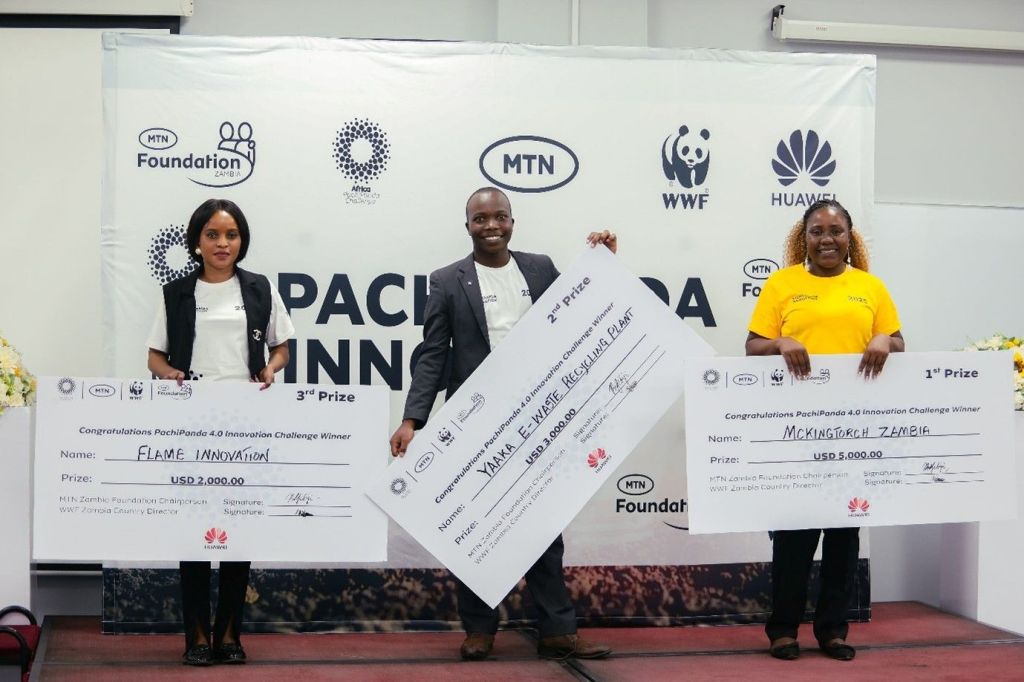
In Zambia, McKingtorch Zambia, founded by Racheal Tembo, addresses the growing challenge of plastic pollution by converting waste into durable, eco-friendly products such as bags and slippers. Beyond reducing environmental hazards and waste-management backlogs, the enterprise creates green jobs and skills development opportunities, particularly for youth and women. Its work demonstrates how community-based recycling solutions can deliver both environmental protection and inclusive economic value.
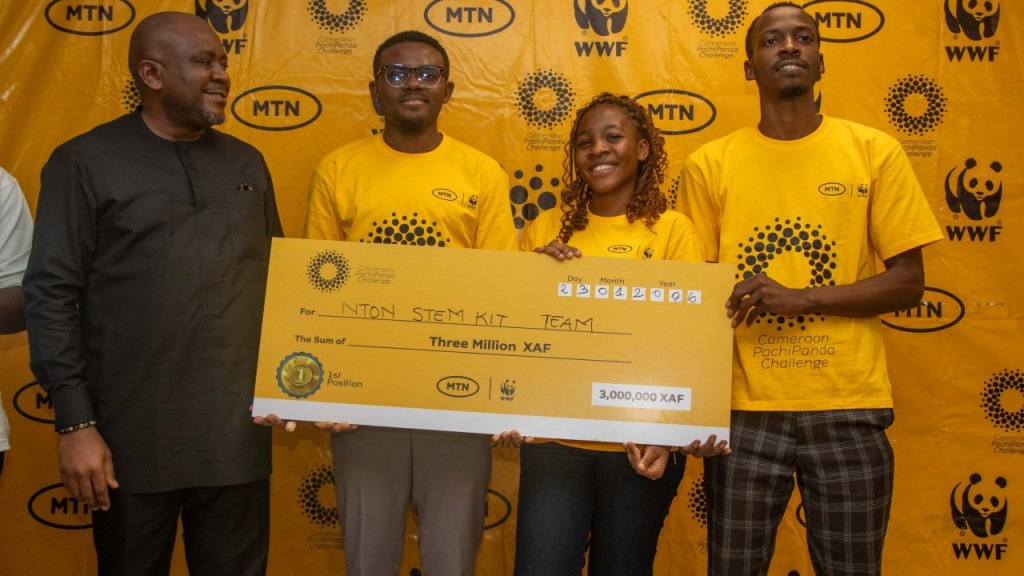
Cameroon’s first-place PachiPanda champion strengthens this pan-African innovation narrative through a solution that links sustainability with education. nTron STEM Kit transforms plastic waste into 3D-printing filaments used to create hands-on STEM kits that introduce young people to electronics, robotics and practical problem solving. By combining waste reduction with skills development, the innovation diverts plastic from the environment while equipping the next generation to participate in Africa’s green and digital economy.
Crucially, the impact of the PachiPanda Challenge extends well beyond the finale. Alumni innovations have translated into tangible, real-world outcomes across food security, education, health and clean energy — preventing more than 120 tonnes of food waste through solar-powered cold-chain solutions, expanding digital learning access to over 15,000 underserved learners, improving women’s health through affordable menstrual-care ecosystems, and delivering clean energy and STEM skills through circular, e-waste-based models. Several innovators have progressed onto international platforms, including African Union-linked initiatives, unlocking further funding, mentorship and market access to scale their impact.
Together, these innovators demonstrate how youth-led entrepreneurship can power progress across Africa — supporting livelihoods, protecting ecosystems and building resilience in communities most exposed to climate risk. Their solutions reflect our belief that sustainable development is achieved by investing in people and purpose, and by enabling high-potential enterprises to transition from early-stage ideas into scalable, market-ready businesses.
As part of the 2025 edition, MTN has strengthened the post-competition value proposition to accelerate real-world impact. Finalists will participate in an enhanced, immersive Masterclass hosted in partnership with Deloitte on 9 February, focused on business readiness, governance, scaling strategies and investor engagement.
Winners will receive funding from MTN to support the next phase of their growth, complemented by structured post-competition mentoring from Deloitte. This extended support model reflects MTN’s commitment to moving beyond recognition alone, towards sustained enterprise development and long-term impact creation. Immediately after the finale, the 2025 finalists will participate in an immersive learning experience hosted by Wits Business School, offering a carefully curated programme that blends history, academia and culture. The experience will include guided engagements at the iconic Wits Planetarium, the Origins Centre, and Wits Business School, providing participants with a deeper appreciation of Africa’s intellectual heritage, scientific inquiry and leadership traditions
As we celebrate their national victories, we also look ahead as they prepare to compete at the Africa PachiPanda Challenge Finals, to be hosted at MTN Group Headquarters in Johannesburg, South Africa, on 10 February 2026. The Finals will mark not only the culmination of the 2025 Challenge, but a milestone in MTN’s broader effort to catalyse Africa’s green economy through youth-led innovation, partnerships and digital enablement.
Their journeys are a testament to the transformative power of youth-driven solutions and a reminder that Africa’s sustainable future will be shaped by those bold enough to build it, today.