

















From connectivity to capability to competitiveness


What Africa’s AI workforce debate reveals about the future of digital inclusion
As world leaders gather at the 81st United Nations General Assembly (UNGA81), a defining question sits at the centre of Africa’s development agenda: how do we ensure that Africa’s young people are not merely consumers of the technologies shaping the future, but creators, innovators and beneficiaries of the economic value they generate?
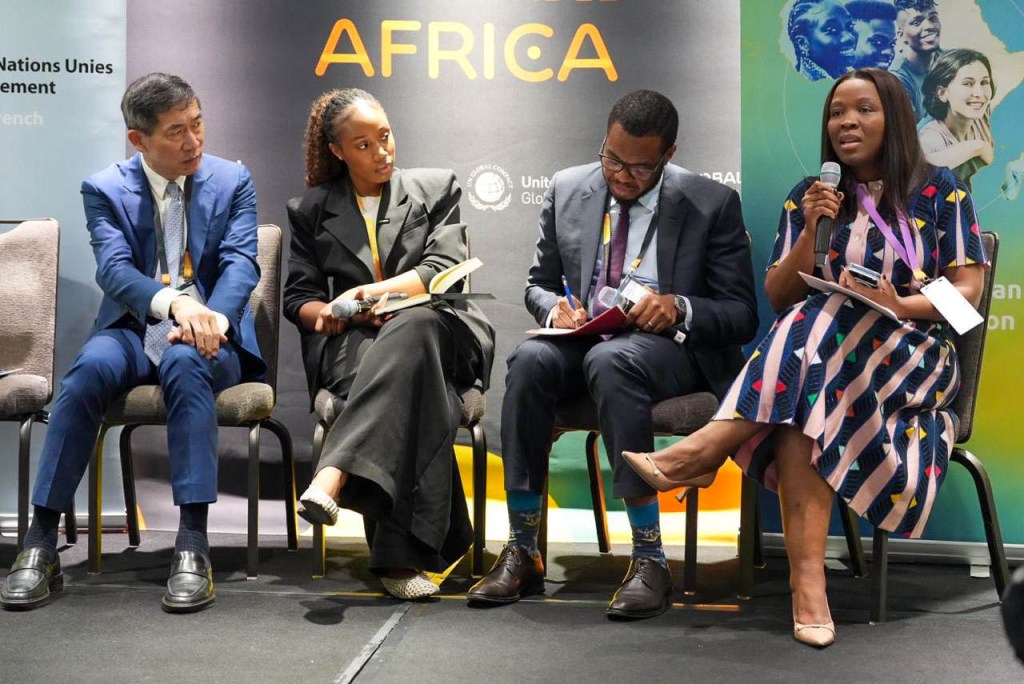
This question was at the heart of the UNDP timbuktoo panel, “Skills, Pathways and Jobs: Preparing Africa’s Workforce for the AI Era.” The discussion comes at a pivotal moment. While employers across the world are struggling to find AI, data and digital talent, Africa is home to the world’s youngest population. According to the World Economic Forum, by 2035 more young Africans will enter the workforce each year than in the rest of the world combined. The question is no longer whether Africa has talent. The question is whether Africa can translate that talent into economic competitiveness.
For years, discussions on digital inclusion have focused on connectivity. That focus was necessary, but connectivity alone is no longer enough. Access to networks, devices and digital learning does not automatically translate into economic participation. The next frontier of digital inclusion is not access, but agency.
The real measure of success is not how many people are connected, but how many people can use connectivity to learn, earn, innovate and participate meaningfully in the economy. This requires a fundamental shift from counting users to creating pathways from learning to livelihoods.
That is precisely why the discussion moves beyond digital skills training to focus on the full ecosystem required for economic participation. The future workforce will require specialised capabilities in artificial intelligence, cybersecurity, cloud computing, data science and digital engineering. But technical skills alone are insufficient. Young people also need work experience, mentors, networks, access to finance and clear pathways into employment and entrepreneurship. Skills must lead somewhere.
A critical insight from the panel is that Africa’s challenge is not one of talent scarcity, but of system design. Too often, interventions operate in isolation. Training programmes are disconnected from employers. Universities are disconnected from industry demand. Device access is disconnected from skills development. Entrepreneurship support is disconnected from financing and markets. The result is fragmented efforts that improve inputs without changing outcomes.
What Africa needs is a learning-to-earning ecosystem.
This is why partnerships are becoming increasingly important. No single organisation controls the entire pathway from education to economic participation. Governments create enabling policies. Universities develop talent. Technology companies provide platforms and tools. Employers create opportunities. Development institutions provide catalytic funding and scale.
The panel highlighted the importance of partnerships in connecting infrastructure, skills development and innovation ecosystems. Discussions between MTN Group Foundation and UNDP reflect this systems approach. Joining forces brings together MTN’s connectivity, infrastructure, digital platforms, Skills Academy, ICT hubs and device-access programmes with UNDP’s policy expertise, government relationships, the timbuktoo initiative, and the University Innovation Pods (UniPods) network to expand pathways to digital skills, entrepreneurship and economic opportunity for young Africans. Through initiatives such as ICT hubs and device-access programmes, young people can gain access not only to learning opportunities, but also to the infrastructure, mentorship and innovation networks needed to apply their skills in the real world.
Yet even partnerships of this scale will not be enough on their own. The economy enhanced by emerging technologies will be built by ecosystems, not individual organisations. Technology companies must help shape curricula and provide access to tools. Employers must move from consumers of talent to co-creators of talent. Universities must adapt faster to changing labour market needs. Development finance institutions and donors must support the scaling of proven models. Governments must continue creating environments that encourage innovation, investment and inclusive participation.
The discussion also highlights a second reality that is often overlooked in debates about the future workforce: talent needs tools.
Africa’s competitiveness in the AI economy will not be determined solely by the number of people trained. It will depend on whether innovators have access to devices, connectivity, compute infrastructure, data and capital. Talent without tools cannot compete. Tools without talent cannot create value.
Ultimately, the conversation taking place at the UNGA81 is not really about technology. It is about economic competitiveness. The countries that succeed in the AI era will not necessarily be those with the most advanced technologies. They will be those that build the strongest systems for converting human potential into economic value.
Africa already possesses one of the world’s greatest competitive advantages: its people. The future of digital inclusion will not be measured by how many people are online, but by how many can use technology to build businesses, create jobs, solve problems and compete in the global economy. In the AI era, that is an opportunity Africa cannot afford to miss.