














Category: Spotlight stories
The digital world is so easy when you’ve got the right tools.
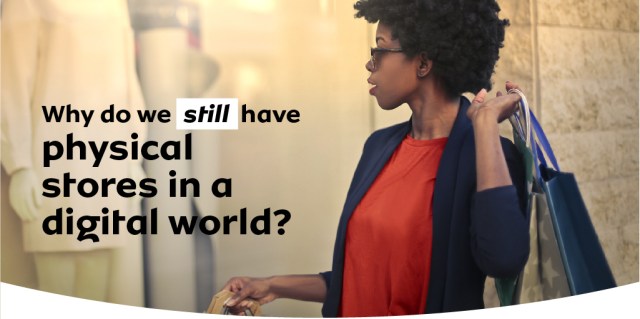
With a good connection, a smartphone and a laptop, almost anything is accessible. Working and hosting meetings from home, ordering lunch, taking a break from work to read an article like this, booking a flight or planning a holiday can all be done without actually going anywhere. The digital link to our physical world becomes stronger every time a new solution, a new app, a new feature or update is made available. Why then, do we still venture into the physical world at all? Why are physical stores still open? Why are companies like MTN, who want everyone to enjoy the benefits of a connected world, still opening brick and mortar stores? In Africa, there are a number of reasons.
In Africa, we are Still Connecting
Mobile penetration in sub-Saharan Africa is at an all-time high. The GSMA reported 456 million unique mobile subscribers in 2018 and that number continues to grow every year. As the African population grows, the workforce grows and more people are purchasing phones for the first time. For those who don’t have a phone at all, the obvious place to start is in a physical store. There are more than 5 million formal and informal MTN retail stores across Africa and the Middle East, making it easy for a first-time buyer to access a digital device.
“There is still value in walking into a store, looking at and touching various devices before making a purchasing decision.”
A Digital World Still Requires Hardware
Despite how futuristic any digital solution available today may be, we still require a physical object in the real world to use it. While online unboxing videos are always fun to watch, there is still value in walking into a store, looking at and touching various devices before making a purchasing decision. Upgrading from a feature phone to a smartphone is a big transition for some, so having a friendly (human) face to turn to for help is necessary.
Stores Create Jobs
With more people to serve, comes the need for more physical stores and people to work in them. The retail industry is people-centred and therefore creates a lot of jobs. In areas where trading hours are extended, shop managers and assistants, cashiers and cleaners work in shifts so that balance between personal and work life, and the consumer demand, is optimized. Without brick and mortar stores for people to visit, the unemployment challenge would become even bigger.
A Human Link to a Digital World
Even if you aren’t a first-time buyer, a friendly face to help navigate the digital world is essential. For people who aren’t considered digital natives with an innate understanding of how their devices and programs work, having a real person to help troubleshoot or discover new tricks and tips can be the difference between seeing the digital world as an overwhelming or awe-inspiring place.
For now, in Africa, enjoying the benefits of a modern connected life begins in the physical world.
Our concrete and digital worlds have become so entwined that we could never go back.
The world is more connected than it has ever been; more efficient, more convenient, more fun at times. We don’t have to wait to get home to make a phone call or wait to develop the photographs we have taken. We don’t even have to walk around with multiple devices to do multiple things. A big part of our world is in the palms of our hands and we thrive on it. While the convenience, efficiency and fun are welcome, the digital world offers so much more than that. It offers the chance to make meaningful connections.
The 2019 International Telecommunication Union (ITU) focused on a central theme of using digital technologies to transform lives in a positive way. This theme resonates with the way the digital world is impacting the lives of people living in Africa.
Our continent is extremely vast. Cities and rural areas of the same countries are often far from each other, which means that traveling between the two is not always easy. For an African person living in a remote location, making a living often means leaving your hometown and your family behind to find a job in the city. A city where nobody knows you, where everything is different, where it is likely to feel lonely, even in a crowd. The digital world in the palm of such a person’s hand is a connection to home. Gone are the days of hoping that a letter to the family arrived via snail mail, or struggling to send money home to a village where bank accounts are not the norm. Today, all these things can easily be achieved with a smartphone and an internet connection.
MTN provides coverage to cities and rural areas in 17 African countries, and that coverage brings people closer together.
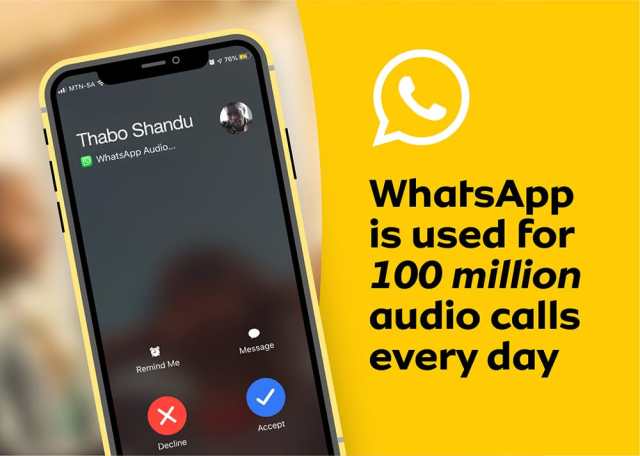
For business owners who want to expand to other markets, the cost of hosting a meeting doesn’t have to include a flight or a long drive. Video and audio calls have become so common across many digital platforms, that it is evolving into the new norm. Facebook reports that 400 million people are making video and audio calls every month, while WhatsApp is used for 100 million audio calls every day. For an entrepreneur who needs to keep costs down but also needs to grow, this technology makes a meaningful impact.
The ITU Forum wants telecommunication companies to consider how we can make connectivity affordable, relevant and fit for purpose so that meaningful connections can be brought to every person in the world. They want “local content in local languages, supported by digital skills, digital education and digital awareness”. We are proud to be able to claim that we as MTN are already doing all of these things.
With 560 million Africans covered, any dream can become a reality.
Connectivity provides more than the internet; it provides a world of opportunities.
In Africa, we take those opportunities and use them to turn ideas and ambitions into something real. For an entrepreneur who dreams of reaching a larger market, an online presence makes the dream possible. For a teacher who wishes more resources were available, digital content provides a wealth of material from all over the world. Connectivity is bringing Africa closer to the rest of the world, and African businesses are booming because of it.
The Brookings Institution in Washington DC published a report about Africa’s untapped business potential, calling our continent the world’s next big growth market. The report lists five business opportunities, and connectivity makes an impact on all of them.
Connectivity is key to Africa’s potential as the world’s next big growth market.
The first opportunity is that our population is fast-growing and urbanizing. Africa’s population is expected to reach 1.7 billion people by 2030. More than 80% of that growth is expected to happen in cities, where people are earning more money and creating business opportunities.
The second opportunity is that Africa is industrialising, and manufacturing is set to soar. The Brookings report notes that African industries could double production to nearly US$ 1 trillion within ten years. Industry 4.0 has brought the Internet of Things, automation and the use of robotics in manufacturing to life. Manufacturing has therefore become more efficient, and safer, than it has ever been.

Infrastructure is improving across the continent, bringing about a third business opportunity. With better infrastructure, it becomes easier to start and grow businesses, and reach various regions both in and out of the country.
There is major potential in Africa’s agriculture and natural resources. The fourth opportunity can be found in innovating the way we farm and use our abundance of resources. With a world-class network, the use of digital solutions like IoT helps farmers to produce more and therefore earn more. Read more about how a connected continent impacts agriculture here.
The fifth opportunity is Africa’s increasing digital and mobile access. The Brookings report notes that mobile data traffic across the continent is projected to increase sevenfold by 2022. Businesses with brick and mortar shops can easily create online stores and reach a global audience, while informal traders finally have the opportunity for financial inclusion because of mobile money.
A smartphone and an internet connection can help turn a small business into a global brand.
As we connect more people to the digital highway, entrepreneurs are born and businesses grow. As those businesses grow, more people have the opportunity to be employed, creating a ripple effect that puts African countries on the global map.
Ever since mobile phones could connect to the internet, it seems that almost every job has the potential to go beyond the typical 9 to 5.
A quick text to a colleague, an important email from a client, a video call with people across the world – these tasks no longer require office hours. Mobile technology has altered the way we work forever. While we marvel at (or bemoan) our extended workdays, farmers have been doing it for centuries. Neither crops nor livestock are concerned about the numbers on a clock or the public holidays on a calendar. The farmer’s day does not end when the sun sets; because when the sun sets the farmer has to worry about whether his or her livestock is safe and secure, or whether that cow might give birth at midnight, among a range of other concerns. In an innovative world, this is where technology comes in to ease and optimize the workload.
Innovation for farmers comes in the form of cloud-based technology and the Internet of Things. This pillar of Industry 4.0 has led to the creation of smart collars for livestock.
When an animal wears a smart collar, the farmer can track its location and health in real-time.
Rather than wondering whether a predator or a thief is going to get away with an animal in the middle of the night, smart collars minimise the guesswork. If, for example, a predator enters the territory of farm animals, the heart rate of the farm animal will increase and the farmer will be alerted about the distress immediately. Naturally, alerts from the smart collar are sent straight to the farmer’s phone in the event of a potential incident. The ability to prevent rather than react to incidents results in fewer animals lost, and more money saved in the long run.
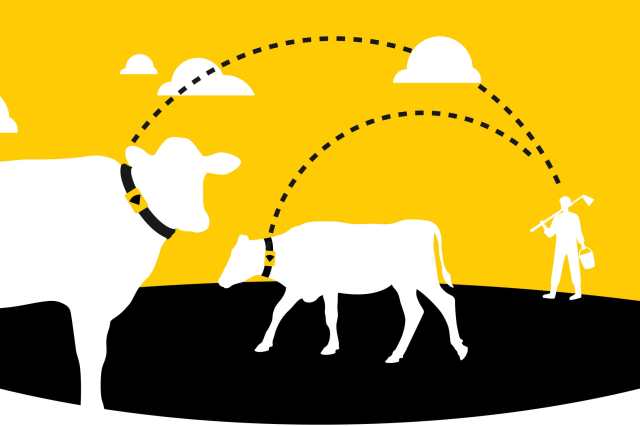
In countries like South Africa, smart collars are helping to prevent the theft of livestock as well as the ability to identify an animal if it wanders over to a neighbouring farm. The combination of a smart collar, cloud-based management and a user-friendly digital interface also enables farmers to gather data and identify behaviour patterns, which lead to more informed decisions about managing livestock.
Similarly, in Nigeria we launched an animal identification management system to monitor cattle location, send emergency alerts in cases of distress and create grazing areas through solar powered GPS geo-fences.
Smart collars have made an impact on Africa’s rhino poaching problem as well. MTN partnered with IBM, a university in the Netherlands called Wageningen, and a game reserve called Welgevonden to create and deploy smart collars for animals in danger of being poached. Whenever the behaviour of an animal in the game reserve changes (as they do when hunters approach), game rangers receive alerts and are able to act quickly.
With more than 1000 rural sites installed by MTN in Africa, more livestock farmers have the ability to use smart collar solutions. When connectivity becomes the enabler to solve age-old problems, technology becomes so much more valuable than answering a late night email.
If you enjoyed this article, read about how crop farmers are using IoT solutions here.
Like a snowflake or a fingerprint, we are all so different. We have different likes and dislikes, different habits, live in different countries and continents. The human race is a fantastic mix of individuals born into the world with their own unique path to follow. As different as we are, we are also all the same in so many ways.
It doesn’t matter who you are, where you are, or what you do – the need to feed our human bodies is one of life’s great equalizers. Food is something that some of us take for granted, and that others have in such minimal amounts that they can barely stay alive. We have a food problem. According to an organization called Future Agenda, the world will need 60% more calories per day to feed 9 billion people by 2050. And yet the world wastes 2 billion tonnes of food every year. A large portion of that food is wasted at an agricultural level – before it even reaches a factory or your dinner table. If ever we needed a reason to use technology to solve a global problem, this is it.
The UN reports that almost half of the African population relies on agriculture to make a living. Imagine the potential to solve our food problem if we could enable half the African population, 530 million people, to farm more efficiently? It all starts with a connection. When farmers are connected, Internet of Things solutions become a reality.
MTN has over 1000 rural sites, taking us closer to a truly connected continent.
The Internet of Things has become a major contributor to a concept called precision agriculture. The objectives in combining technology with farming include higher yields, reduction of operating costs and an overall increase in efficiency. One example can be found in Kenya. A company called UjuziKilimo installs sensors in farm soil which send data to farmers’ mobile devices. This data includes weather updates which helps farmers decide when to plant seeds in our ever-changing climate, and even information about soil quality. Farmers only need to send a text message to UjuziKilimo for the team to come out and begin with a farm-analysis. And when farmers are connected, they are able to share the data they receive with their neighbours – spreading the knowledge, and amplifying the impact so that everyone is maximizing the potential of their own farms. In South Africa, farmers are also making use of mobile apps to send alerts about pest problems and receive weather updates and other farming related advice.
[vimeo 219679989 w=640 h=360]
A sustainable farm is a successful one which makes a far-reaching impact. More people can be employed in the agriculture sector when farming is efficient, and more food is produced to feed our growing global population.
All of these solutions are only possible because of our natural eagerness to innovate, and the ability to do so with technology and connectivity as a solid foundation. Technology and people truly can be good together – and that’s food for thought!
References:
Global Farmer Network – Rwanda Leadership Honoured
Farmers Weekly – New Smartphone Apps to Help Farmers
Brookings – Foresight Africa 2016
The ripple effect of mobile money is changing the lives of people in Africa and beyond.
Cause and effect. It is the backbone of science, and the reality of our daily lives. Sometimes, the effect is minimal and even unremarkable. Other times, the effect is big enough to change the trajectory of entire lives.
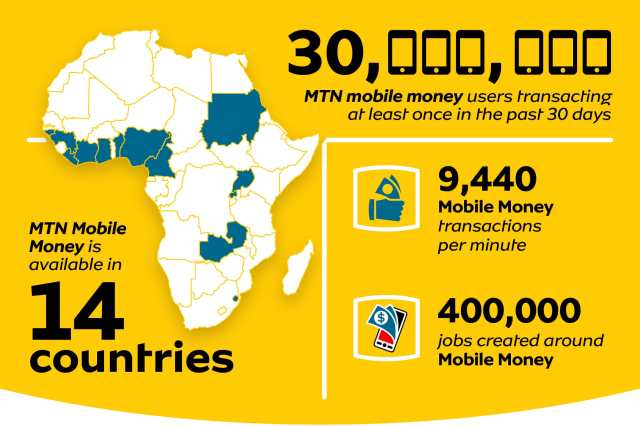
We see examples of cause and effect in technology all the time. A single tweet, a new invention, a simple app, can change the future. One example worth noting, is mobile money. Mobile money is changing the way millions of people manage their finances, and it has led to the creation of a new ecosystem. We estimate that the MTN mobile money ecosystem has contributed to the creation of 400 000 jobs across our footprint.
Consider how different your life would be if you didn’t have access to financial services. Is there a safe place for you to put your salary, in cash, every month? How would you purchase a home or pay school fees? Would you be able to stand in a queue every month to pay your bills in cash? Would you ever have a chance to get a loan? For the majority of people living in Africa, this is reality. The rise of mobile money is not just convenient, it is life changing. And it has created a ripple effect across an entire continent which goes much further than convenience.
The GSMA reports that more than a decade into the creation of mobile money, transactions to the value of $1.3 Billion per day were done in 2018.
A typical active mobile money user transacts to the value of $206 per month. This number is expected to grow as the adoption of mobile money is growing by 20% every year. MTN is proud to play a part in financial transformation on the continent, ensuring that our subscribers have access to a mobile way of managing money where traditional institutions are unable to assist.
Mobile Money Gives 400 000 people Jobs
Imagine yourself as a talented entrepreneur living in an African country, selling products to people in your community. A laptop and a mobile phone may enable you to build an online store and market your products to the world, but without a bank account, how would you make transactions beyond your physical reach? Mobile money is giving entrepreneurs a chance to start and grow their businesses. With more successful businesses, come more opportunities for employment.
Mobile Money provides two streams of financial empowerment. The first, is that with a small sum of cash and a mobile phone, the youth which make up the majority of Africa, can become Mobile Money agents. Today MTN Mobile Money is working with 400,000 agents . The second stream is for innovative entrepreneurs who leverage mobile money to collect payments. The ability to collect payments digitally is a step toward digitizing a business and being truly innovative. For example, prepaid solar power and water providers have been able to reach remote areas of the continent while insurance companies have been able to disrupt their commercial models by creating products for consumers that previously had no access to insurance services – all by leveraging the mobile money platform.
The Ripple Effect of Mobile Money
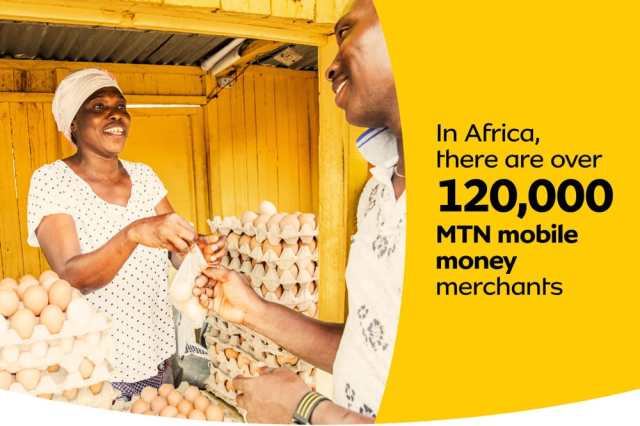
With the rise of mobile money, came the demand for merchants. There are 120 000 MTN mobile money merchants in Africa which implies 120 000 businesses have been able to increase their revenue. By accepting digital payments and bringing a digital element to traditionally brick-and-mortar businesses, Mobile Money can play a central role in empowering entrepreneurs. Becoming true drivers for economic and social growth, entrepreneurs can grow their businesses and employ people. This has a direct effect on the bottom line for people who have previously been ignored by traditional financial institutions.
A simple app, a few organisations working together, a continent full of talents and entrepreneurs and millions of people in need of financial services have contributed to the creation of 400 000 jobs. Could you think of a better example of technology making a meaningful impact?
Millions of people on the continent have been excluded from financial services. However, with technology and innovative business models, we have simplified access to financial services.
Consider an ambitious woman who lives in a remote part of Zambia. She runs a small business, and starts using mobile money to accept payments from customers. With that same mobile money platform, she starts to send funds to family members in other parts of the country, paying for emergencies, health care and everything else her family may need. She may be hundreds of kilometres away, but her family still needs her, and she is able to meet their needs because of the technology in her pocket. Using mobile money to pay for her daughter’s school fees saves the woman from queuing to pay bills, buying her more time to increase her business revenue. When the sun sets, she uses mobile money to access solar power solutions so she can turn the lights on and keep going. And when she is ready to take her business to new heights, it is through mobile money that she can access a micro loan because mobile money has given her a financial history. This financial stability leads to stability in her business and in her home.
MTN now has 30 million active mobile money subscribers in 14 countries on the continent.
The range of solutions to close the financial services gap in the markets in which we operate requires partnerships with financial services providers, regulatory authorities, other mobile network operators, merchants, distributors, innovators and business associations. It is through working with our partners that MTN now has 30 million active mobile money subscribers in 14 countries on the continent – this has significantly improved the economic and social well-being of millions of Africans.
 How Mobile Money Affects Social and Financial Inclusion
The World Bank defines social inclusion as the process of improving the terms for individuals and groups to take part in society. Participation in society comes in three forms; markets, services and spaces. Markets, specifically, refer to labour, housing and credit. Mobile money is giving unbanked people in Africa the opportunity to participate in local and global markets. When wages are paid digitally to a mobile wallet, people with no traditional ‘paper trail’ suddenly have a digital trail and proof that they are able to earn and spend, and most importantly, save. Creating or growing a business becomes a reality, because money can safely be put aside for future investments. Eventually, that growing business requires staff to operate and continue growing. So jobs are created, and the community benefits.
This is not the story of one woman who wanted to grow a business. It is the story of millions of people in Africa on a journey to financial transformation. We estimate that MTN Mobile Money has contributed to the creation of 400 000 jobs across the company’s footprint. If you’d like to read about the ripple effect of this phenomenon, click here.
References:
OECD Library – Africa’s Development Dynamics 2018
The World Bank – Social Inclusion in Africa
If you want to see what the digital divide looks like, look at the children.
There are children who seem to be born with an iPad in their hands, and there are those who will not have access to a computer until they reach a certain grade at school. Both groups will grow up in a digital world, and both groups have a great chance of thriving in the digital world if they are provided with the skills, tools and mentoring required to become great at anything.
By investing in the digital education of children in Africa and the Middle East, we are levelling the playing field and preparing our youth to become innovators in the digital world.
How is a student meant to excel in a digital world when they have limited or zero access to computers and connectivity?
This is why part of MTN’s CSI funds are used to equip educational institutions with the digital tools needed to advance the United Nations’ Sustainable Development Goal of advancing the quality of education (UN SDG 4).
In Benin, where access to textbooks is limited, the MTN Benin Foundation created 50 digital classes for 50 schools. Digital literacy training was provided to the facilitators managing the classes, along with a donation of 1000 laptops and the necessary connectivity. Now, more than 15 000 students and 100 teachers have access to the learning materials required for a good education.
E-libraries, online journals and other digital learning and research materials not only fill the gap where physical books are lacking, they also give learners the opportunity to make technology the foundation of their education. Other initiatives include the donation of a digital library to an orphanage in Afghanistan, where 200 children now have access to 3000 e-books. In Ghana, MTN donated an ICT centre for university students who required online research materials. The centre benefits 10 000 learners and the lecturers at the university. Over the years, we have established more than 925 computer labs and ICT facilities, because we believe that everyone deserves the benefits of a modern connected life.
MTN Ghana constructed a 24 unit classroom block which benefits 10 000 learners every year.
There is no point in introducing a school to computers when the school’s classrooms are dilapidated, so MTN first ensures that those without the basics get the help they need. Through a programme MTN established called Y’ello Schools, the MTN Cameroon Foundation has constructed 31 classrooms, and installed 16 potable water points, to improve the learning conditions of at least 16 400 students and 154 teachers. In Uganda, partnering with an initiative called Promoting Equality in African Schools, the Foundation has played a major role in constructing 10 schools.
By donating and installing smart boards in schools and computers in media centres, children in Africa get the chance to innovate just like those in developed countries. By working together, we are levelling the playing field, so that learners in Africa have the foundation required to innovate and bring real transformation to the continent.
In Africa, we want to be part of the creation of a digital world, where technology underpins everything we do.
To get there, we start by finding ways to overcome our own unique challenges. Where stumbling blocks are too high, we weave a path around them. We get there, but our route is different to the route the rest of the world takes. The African approach to going digital can be seen in the way we handle healthcare.
The African approach to going digital can be seen in the way we handle healthcare.
It is no secret that medical care in Africa is not as accessible as it is on neighbouring continents. It is also no secret that Africa is home to some of the world’s fastest-growing economies. Our approach to going digital is mobile, because mobile works for us. According to the GSMA’s 2019 report on the Mobile Economy of Sub-Saharan Africa, half of the population will subscribe to mobile services by 2025. For this reason, we implement and support digitally-driven healthcare initiatives as part of our contribution towards the United Nations’ Sustainable Development Goal of achieving good health and well-being. Part of the R1 Billion MTN has invested in various CSI initiatives since 2001 goes toward making mobile healthcare in Africa possible.
In Cameroon, for example, a solution was required to reduce the time it takes to diagnose HIV in new-born babies. Early infant diagnosis is crucial to the success of treatment for babies born with HIV. The MTN Cameroon Foundation and the Clinton Health Access Initiative worked together to create the SMS Printer for Life project. The solution ensures that results are delivered on the same day as the test, by transmitting information between laboratories and health facilities instantly. MTN’s coverage in Cameroon enables the connectivity for results to be sent via text message to a printer at a clinic, and to the phones of the infants’ caregivers. HIV positive babies can therefore be enrolled in a treatment program as soon as possible. Since the initiative was launched, more than 11 800 lab results have been delivered and 700 healthcare facilities in the country currently use the solution.
Approximately 10,000 nursing students have benefited from 10 multimedia centres in South Africa.
As technology continues to make a positive impact on the medical field, it becomes essential for those working in healthcare to be digitally savvy. In South Africa, MTN piloted a programme at Chris Hani Baragwanath Hospital to provide digital tools to nurses in training. Since the programme began in 2014, 10 multimedia centres have been installed at nurse training institutions. These multimedia centres feature computers and printers, smart boards and internet connections, and has benefited approximately 10 000 nursing students. The students now have access to online learning materials which would otherwise have been difficult, and sometimes impossible, to come by.
Lecturers and students are also provided with computer literacy training, so that everyone at the institution can benefit. Lecturers are now taking a digital approach to updating curricula and teaching resources, as well as conducting research and grading student assessments. The digitization of the work has made a great impact on the student nurses, so much so that the institution’s pass rate has gone from below 65% to 94% in the years that MTN has become involved in their digital needs.
By taking a digital approach to healthcare challenges in Africa, we are working toward making the continent’s population healthier, so that they can become unstoppable!