










Category: Spotlight stories
The internet is the ultimate creator of opportunities.
A connected device makes the world more accessible and sets ideas in motion. If you have a business idea, the internet is your resource library to ensure your idea is truly unique. If you have a product to sell, the internet becomes your sales platform, and your target market can be global. If your idea requires funding, the internet is your tool to find the right investors. In Africa, the opportunities the internet provides are grabbed with both hands, taking the continent several steps closer to becoming the next economic giant. Small businesses can reach large markets, while consumers who were previously not prioritized finally have the luxury of choice and variety.
Mobile operators like us are providing connectivity to 560 million people on the continent.
E-Commerce Makes Products Accessible in Africa
A vast terrain and countless small villages means that physical access to a variety of stores is not realistic for many people living in Africa. The rise of e-commerce brings that variety closer to consumers who live in remote areas. In an article for Mckinsey about how e-commerce supports African business growth, the co-CEO of Jumia, Sacha Poignonnec, notes that a lot of their consumers live in small villages and cities outside of the typical metropolitan areas.
While e-commerce provides more choice and accessibility to African consumers, business owners on the continent are able to expand their reach. Internet coverage continues to grow, with mobile operators like us providing connectivity to 560 million people on the continent. Entrepreneurs with brick and mortar shops are able to add a digital element to their businesses at a fraction of the cost of purchasing a new physical property. With a wider audience available online, more products can be sold and small businesses can grow to employ more people.
Tech Hubs are Popping up in Africa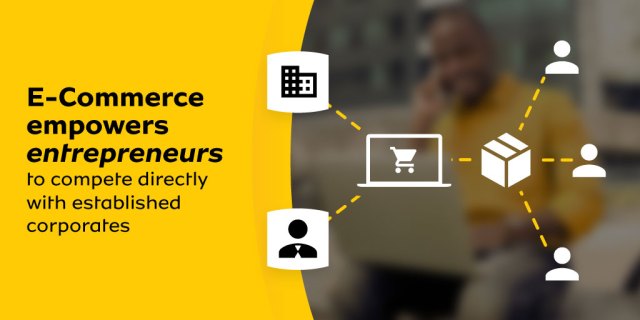
As connectivity becomes more accessible, so does the potential to create tech hubs in Africa. South Africa’s Silicon Cape has become an enabler for tech related start-ups in the country’s capital city of Cape Town. Small businesses with big ideas are given the platform to connect with investors and use funding to turn their ideas into global solutions.
Ghana’s Silicon Valley has the world looking in the direction of Africa for the next big tech-hub. Their innovation centres not only enable research and education in the fields of Science, Technology, Engineering and Maths (STEM), they are also spaces for product development. Their website describes the innovation centres as spaces which will allow “a strong industry and university research collaboration to develop enhanced products that will make Ghana the envy of Africa for innovation…” Silicon Valley of Ghana recently hosted the largest hackathon in West Africa, where 600 students were trained in software development. With more tech-related training taking place, more opportunities to create jobs and new careers become available.
As people in Africa get access to the internet, the opportunities for people in Africa to become global players in the digital world continue to grow.
If you were to travel back in time, just a few decades, how would you begin to explain to people of the past what the world is like today?
Would you start by explaining that our phones are in our pockets and not permanently attached to a cable in the wall? Would you talk about the existence of an app which can turn any home into accommodation? How would you explain the way jobs have evolved? So many popular careers today simply did not exist a few short years ago.
The creation of the digital world has led to the creation of countless jobs. Before Facebook or LinkedIn, there was no social media manager. Before Google Adwords, there was no digital marketer. Today, digitally focused companies are among the most successful in the world.
Our API portal is currently used by 1000 young developers who want to improve or add to existing online solutions.
In regions where there always seem to be more people than jobs available, the digital world provides an additional avenue for employment. As more youth in Africa choose to take digitally enabled career paths, coding online platforms and innovating solutions, they are creating more opportunities for the people around them.
The very nature of today’s youth, with their innate understanding of all things trending and tech-related, could be the key to aiding unemployment in Africa. Entrepreneurship is encouraged across the continent in order to create more jobs and reduce unemployment for youth who have completed their studies. (note: link to African Entrepreneurs are Benefitting from franchises) Even Alibaba founder, Jack Ma, feels that African youth should be encouraged to create their own start-ups and get a tax break from the government for doing so.
African start-ups are already thriving so much that investors are flocking to events like AfricArena to discover new innovations coming from the continent. Companies like South African based Aerobotics are providing artificial intelligence solutions to clients all over the world. The ripple effect of the rise of such start-ups is the creation of new jobs for people in Africa.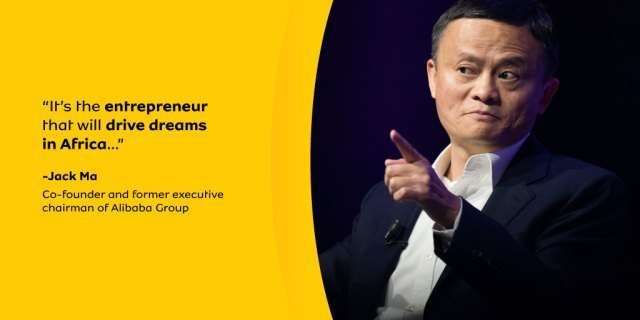
As connectivity improves throughout the continent, access to digital services and tools become more easily available. With a public API’s becoming accessible at a rapid pace, youth in Africa have more opportunities to create more digital solutions. Our API portal is currently used by 1000 young developers who want to improve or add to existing online solutions. When the youth code, they create jobs for those who cannot.
Consider all the roles involved in building an online store. A graphic designer and copy writer are both essential for a developer who wants to build an aesthetically pleasing and user-friendly website. Products need to be created to sell on the online store, providing an employment opportunity for those who can create. When products are ordered, they need to be delivered to customers, which produces an additional set of jobs involving logistics. One simple website can become the source of employment for many. Even those who aren’t considered tech-savvy.
The future of jobs has already begun, and as our digital world evolves, we are likely to see even more jobs in the future which we cannot imagine today. Technology and job creation certainly are good together!
In an era where the lines between our digital and physical worlds are blurred, the simplest solution can change the lives of many.
When we travel unknown roads, a GPS app guides the way. When we are swamped at work, a virtual PA can turn a chaotic day into an organized one. When people who previously had no access to traditional banking can use a phone make financial transactions, financial planning becomes a reality. The rise of mobile money presents numerous opportunities for people in Africa, including the opportunity to save and plan for the future. Today, 6 million MTN Mobile Money users have opted in to make the best of this opportunity to save, in several important ways.
6 million MTN Mobile Money users have opted in to make the best of this opportunity to save.
Education
Free education is not yet available throughout the continent, so many African parents are required to contribute to the cost of basic and secondary education. Tertiary education is often not a reality for those who complete high school. The Africa Report cites an alarming UNESCO statistic; 60% of children between the ages of 15 and 17 do not go to school. Mobile money enables parents to save for the education of their children, and to pay school fees every month in a safe and easy manner.
Medical Needs
Nobody plans to fall ill or become injured, but such incidents happen every day. These incidents become infinitely more stressful when medical bills pile up or access to treatment isn’t possible without the immediate availability of funds. Access to mobile money opens up a world of financial solutions for people in Africa, including hospital insurance. The ability to get medical cover through a mobile phone is just one example of how financial inclusion is becoming a reality for Africans.
Retirement
Technology has led to a number of medical breakthroughs. So many illnesses that used to cause death are now treatable, and more people are living to the age of 100 than ever before. In South Africa, most people cannot afford to retire or live solely on retirement income without an additional income. Regular saving through mobile money makes it more realistic for people in Africa to plan for retirement and less likely to rely on family members to get by.
Death
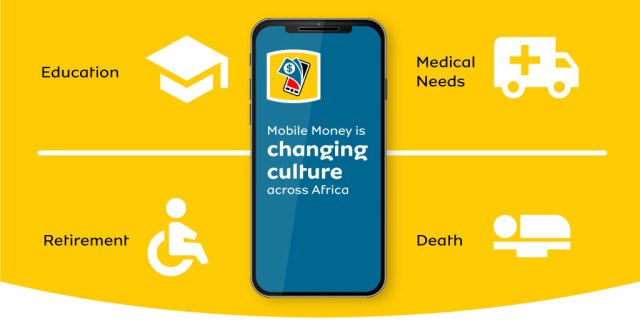
Princeton University, the Harvard School of Public Health, the University of Cape Town and the University of Chicago collaborated on a paper titled The Economic Consequences of Death in South Africa. The paper discusses how the death of an individual in an African household can have a major impact on those who are left behind. A death in a family can be the difference between food on the table and poverty, if that person is the sole breadwinner in the house. Mobile money offers users access to mobile life cover, so the financial head of a household can save funds to help the family in the event of his or her death. Funeral policies can also be taken out, so that the cost of saying goodbye doesn’t add to the heartbreak of losing a loved one.
A simple app, on a pocket-sized phone, can make a major difference to a lot of people. Not only does mobile money give African people an entry to the global economy, it gives African people the opportunity to plan for the future.
Behind the Scenes: What Makes us Good Together?
Good together is more than a catch phrase at MTN; it is a belief which forms the foundation for everything we do for the people we serve. What exactly makes Africa and MTN good together? We have launched a campaign to illustrate the answer to that question, starting with a TV commercial which highlights just how unstoppable the African spirit can be when our continent’s people are connected.
Take a look at the behind-the-scenes video below to find out what went into the making of the TV commercial, and the experiences had by those involved. Our Group General Manager, Victor Rakhale, explains that this is the first global positioning campaign we’ve created in close to 10 years, showing exactly what makes us different. TBWA/Hunt Lascaris produced the commercial and their Creative Director, George Low, acknowledges that while everyone knows what MTN does as a business, it isn’t always clear what kind of good that business does. The role our business plays in Africa’s health and education is essential for the delivery of a modern connected life. Connecting people is about more than putting technology in the hands of the African population; it is about transforming communities.
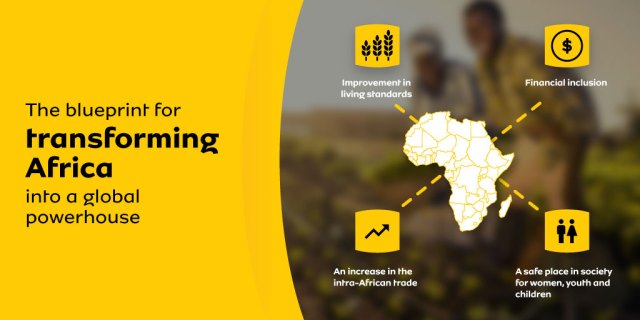
We live in an era where change is demanded. The digital world has played a big role in bringing the inequalities of the physical world to light. Thanks to technology, we are more aware of the state of different parts of the world than ever before. Technology eliminates the excuse of ignorance and provides us with some of the tools needed to address inequality. Consider the role technology can play in achieving the African Union’s 2063 Transformational Outcomes. The AU describes Agenda 2063 as Africa’s blueprint for transforming Africa into the global powerhouse of the future. Access to a connected world can make a positive impact on the achievement of these outcomes.
Improved Living Standards
First on the agenda is an overall improvement in living standards for people in Africa. This includes reducing poverty and hunger, providing access to basic education and health, as well as access to basic requirements like safe drinking water and electricity.
The role technology plays here is one of job opportunities. A digital world provides a set of job opportunities and revenue streams which did not exist just a few years ago. With more youth coding for their futures (note: link to youth coding article) and taking an entrepreneurial path in their careers, more jobs are created for people living in Africa.
“When stories in the digital world lead to action in the physical world, it shows just how good people and technology can be together.”
Transformed, Inclusive and Sustainable Economies
Financial inclusion is necessary for a country’s economy to thrive. Without access to financial services, people cannot easily participate in the economy. The AU goal in this case includes the aim of ICT penetration contributing to GDP, at double the rate it did in 2013.
Mobile Money has proven itself to be the solution for financial inclusion in Africa. On our continent, people are more likely to have a cell phone than they are to have a traditional bank account. Mobile Money takes a digital approach to finance, filling the gap where traditional banking alienates millions of people in Africa.
 Integrated Africa
The AU lists several desired outcomes in its aim for an integrated Africa. This includes free movement of goods and people on the continent, an increase in the volume of intra-African trade, upgraded transport and infrastructure as well as an improved education system.
As more areas within the continent become connected, goals such as this one become more realistic. Communication is already easier thanks to the popularity of mobile phones in Africa, which makes it more practical to move goods across the continent. As more Internet of Things solutions are deployed across the continent for various applications, more opportunities for efficiency and cost saving become apparent. With a reliable internet connection, building and deploying IoT solutions is a realistic (and profitable) way to solve challenges which are unique to Africa.
Empowered Women, Youth and Children
Technology provides us with a platform to share our stories, giving everyone who is connected a voice which the whole world can hear. The current state of the world is one where equality is no longer tolerated, and action can be taken to ensure that women, youth and children have a safe place in society.
Whether stories are produced by a journalist or by a person directly involved in it, that story has the potential to reach millions. The internet is a place where anyone can share their experiences, ask for help and do the research. When stories in the digital world lead to action in the physical world, it shows just how good people and technology can be together.
Well-governed, peaceful and cultural centric Africa in a Global Context
Perhaps the AU’s most detailed desired outcome for 2063, connectivity has a role to play in each part of it. This includes a 60% increase in local content in print and digital media, an increase in focus on the creative arts, and even the establishment of an African Space Agency.
While we provide coverage to over 560 million people in Africa, there is still so much room for growth. As we increase coverage in the regions where we operate, the opportunities to achieve these goals becomes much more realistic. Whether increasing digital media or taking African people to space, connectivity is imperative to achieving these goals.
How Mobile Money Can Change the Culture of Saving in Africa
Becoming financially responsible is a goal people all over the world struggle with. Whether we earn enough to be financially spontaneous at times, or our bills ensure that every cent is spent, the cost of living always seems to increase just a bit more than our income. Saving any portion of that income is essential for many reasons including emergencies and our own personal goals. But saving requires discipline and a bank account. Temptation to spend our intended savings is usually deterred by putting the funds into a separate savings account. What happens when you don’t have a bank account? Financial institutions have repeatedly told us that it’s no good storing the money under our mattresses. For the millions of people in Africa with no access to traditional banks, the solution is Mobile Money.
There are 30 million MTN Mobile Money active monthly users across 14 countries in Africa.
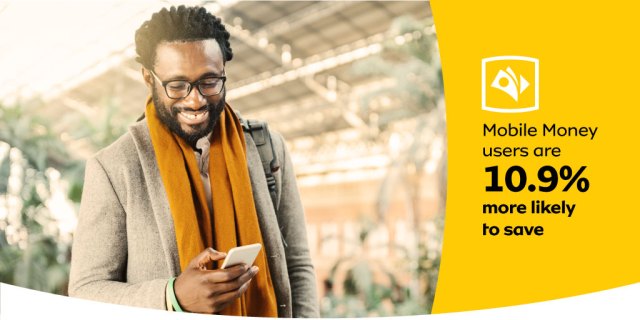
Living from pay-check to pay-check is common in African countries, but Mobile Money is changing this way of living. According to a report from the Boston College Economics Department, Mobile Money users are 10.9% more likely to save than those who do not have a Mobile Money account.
There are 30 million MTN Mobile Money active monthly users across 14 countries in Africa. Of those 30 million people, 6 million use MTN Mobile Money to save funds.. This means that 6 million people in Africa plan to alter their financial behaviour. Just as a person with a traditional bank account would use a banking app or website to pay home loans, school fees, and then transfer a portion into a savings account, an MTN Mobile Money user can now do exactly the same.
A shift towards saving more brings incredible potential to Africa. Aside from being able to handle income variations, planning for the future becomes much more realistic. For example, working parents are able to save to provide their children with a higher education. In countries like South Africa, where the annual cost of university and boarding fees costs more than the average household income, it is essential to start saving for a tertiary education as soon as possible.
With more people who live in Africa able to use mobile money to save, there is a higher likelihood of saving for retirement. Mobile technology isn’t just about the chance to change the financial behaviour of people in Africa, by removing the barriers that prevent important tasks like saving money. Mobile technology can change the trajectory of everyone on the continent.
The entrepreneurial spirit is strong in Africa.
Where there are no jobs available, African people are encouraged to create jobs. In countries like Cameroon, part of the national strategy to reduce poverty includes entrepreneurship. In Uganda, entrepreneurship has been worked into the school system so that the youth can learn to run businesses before they enter the workforce.
The African Union Development Agency recently launched a campaign called 100 000 SME’s for 1 Million Jobs by 2021 which aims to provide concrete opportunities for youth in the areas of education, employment, entrepreneurship and engagement. The continent-wide call for more entrepreneurs will also help to achieve several of the UN’s Sustainable Development Goals. This includes a reduction in poverty, decent work and economic growth, reduced inequalities as well as industry, innovation and infrastructure.
“MTN, for example, lends support to 5 million of MTN retail store owners across Africa and the Middle East.”
The digital world provides all kinds of entrepreneurial opportunities, from publishing blogs and creating online stores to managing the digital marketing activities of other business owners – almost anyone can operate a business online, and find a YouTube tutorial to learn the relevant digital skills! For those who prefer working in the physical world, there is clearly still value in traditional brick and mortar businesses – read more about that here. (link to physical stores article)

A publication for small business owners published an article in 2019 about the advantages of buying a franchise. The first advantage listed is the power of the franchisor’s brand. All the heavy lifting has already been done when you purchase a franchise – the brand is established and therefore more likely to be trusted, the business model is tried and tested and even the colour of the paint on the walls has already been chosen. When an entrepreneur buys a franchise, they certainly aren’t starting from scratch.
Other advantages listed in the article include the opportunity to rely on the experience and reputation of others. If you aren’t opening a first-of-its-kind business, you are likely to enjoy a range of benefits including supplier discounts and traction from regional and national marketing campaigns. When new customers walk through the door, they are already familiar rather than sceptical.
Possibly one of the most important advantages listed is support. Starting and running a business can be daunting for even the most confident person. MTN, for example, lends support to 5 million of MTN retail store owners across Africa and the Middle East. Support includes the relevant training and ensuring a full understanding of the business model. It also includes the opportunity to learn from the insights of other franchisees, while running a business completely alone requires time-consuming research and a lot of trial and error.
As the continent’s population grows, so does the need for jobs and the opportunity to gain new customers. Opening a franchise in an African country can certainly be considered as a way to be entrepreneurial with minimal risk.
Technology is the ultimate disruptor.
It has made an impact on everything we do and everything we interact with. This includes the way we consume content. Music, movies, games and stories broke out of their physical constraints and into the digital world as soon as the right tools became available. Today, there is so much content available for consumption that it would be impossible for an individual to get through all of it. To put the volume into perspective, consider that 400 hours of video is published on YouTube every minute.
Content creators have more platforms available to showcase their work than the world has ever seen. Artists have a better chance of reaching the right audience than ever before, and even a niche audience can be made of millions in a digital world. In Africa, people are just as likely to stream local content as they are to stream whatever is trending worldwide. A band from Nigeria is just as likely to sell out a show in their own country as a visiting Grammy winner is. People in Africa love streaming African content. So much so, that millions of people have subscribed to MTN’s various rich media services, including music streaming services.
Artists have a better chance of reaching the right audience than ever before.
In 2019, the International Telecommunications Union posed the question of how to bring meaningful connectivity to all the world’s citizens. This includes local content in local languages. Rich media services are doing just that by enabling anyone with a cell phone and an internet connection to watch or listen to exactly what they want, whenever they want.
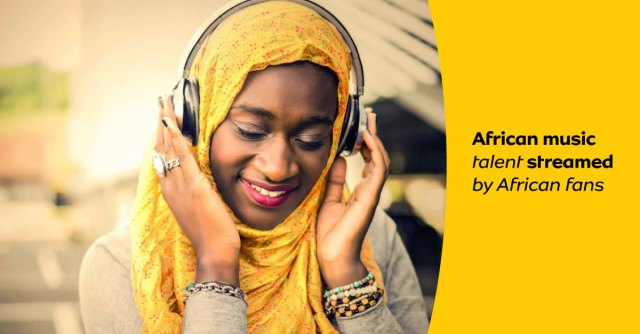
So much music is featured on the global streaming giants, that content which isn’t coming from the US can quickly become lost in the mix. Those who understand the power of African music are therefore investing in bringing local content to the mobile phones of African listeners via various music streaming services.
In South Africa and Nigeria, fans are finding their favourite artists on an app called MusicTime. The website from which to download the app features local artists first, so users immediately know they’re going to find local music easily.
Now that more African artists are being showcased on local and international digital platforms, talent from the continent can be more easily accessed by fans on the continent. This kind of disruption also brings African talent closer to the rest of the world.
Storytelling is as old as mankind.
From drawings on the walls of caves, to words on the pages of a book, to scenes played out on stages and screens across the world. Every community in the world has stories to share with the intention of teaching, informing or entertaining.
The digital world has made a big impact on the way we tell stories today. We tell stories in short form, in long-form, in audio form, visual form, written form, or all forms mixed into one. We tell stories for screens as big as billboards, or as small as smartphones. Our stories have the potential to reach beyond the eyes and ears of those around us, crossing borders and oceans to find a global audience. Stories can be created and published by anyone with an idea and an internet connection, giving us more variety and more content than traditional media ever could. In Africa, stories are in abundance, and the audience is rapt.
“One glance at the content catalogues, and it becomes clear that Africa is teeming with creatives who have a story to tell.”
Considering that in 2018, the GSMA reported 774 million mobile SIM connections in sub-Saharan Africa, it comes as no surprise that more people on the continent are watching video content on their mobile devices than on their televisions. While a lot of that content is found on the world’s largest social media platforms – Facebook and YouTube – local video platforms are becoming popular too. MTN Shortz is one example of a short-form video platform where African content creators are publishing original content.
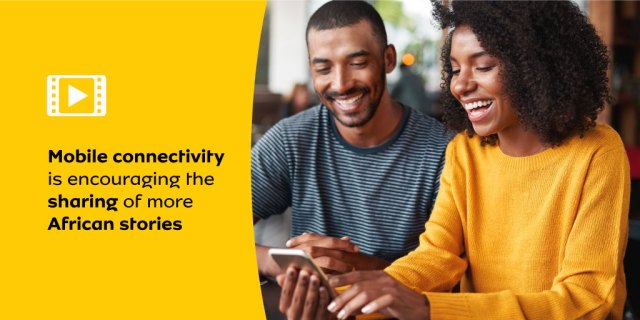
The streaming of local music is also booming on the continent. Whether fans are signing up on Spotify or looking for up-and-coming artists on local platforms like Boomplay, Africa is dancing to the beat of relevant music. Streaming is so popular that millions of African subscribers are engaging with rich media services on MTN’s platforms alone.
Other forms of content, including the news, audiobooks, even games and daily jokes are becoming more accessible to mobile subscribers in Africa. In every country where MTN offers rich media services, the content featured on the MTN Play channels is high in volume and unique to each region. One glance at the content catalogues, and it becomes clear that Africa is teeming with creatives who have a story to tell. The millions of Africans who subscribe to content services to ensure these stories reach their mobile phones make it clear that we want to hear and read and see more.
As more platforms with African roots appear in the digital world, the collective voice of the continent’s creative population becomes louder. Our audience is larger and closer than ever before, and mobile connectivity is encouraging the sharing of more African stories.
Having access to financial services is about more than having a place to store hard-earned money.
It is about planning for the unexpected, the inevitable and the future. Since Mobile Money arrived on the continent, people in Africa now have access to additional financial services including insurance. As is the case with most digital services, insurance in Africa has taken a mobile route.
Insurance companies are very aware that technology should be part of the foundation of their business models. Mobile insurance has been established as the most efficient way to reach the African market. PriceWaterhouseCoopers compiled a report entitled Ready and Willing: African Insurance Industry Poised for Growth which highlights technology as a key trend that impacts insurance. The report notes that mobile phones and Mobile Money offer a significant opportunity for the insurance market in African countries.
Traditional insurance companies are therefore partnering with technology companies and innovators to ensure the right policies and products reach Mobile Money users. MTN Mobile Money users in Ghana and Uganda, for example, are able to take out insurance policies with a company called aYo; the mobile microinsurance service provider is a joint venture between MMI Holdings and MTN. The financial products are underwritten by Metropolitan Life Insurance.
Since aYo launched, more than 5.3 million policies have been issued to MTN Mobile Money users.
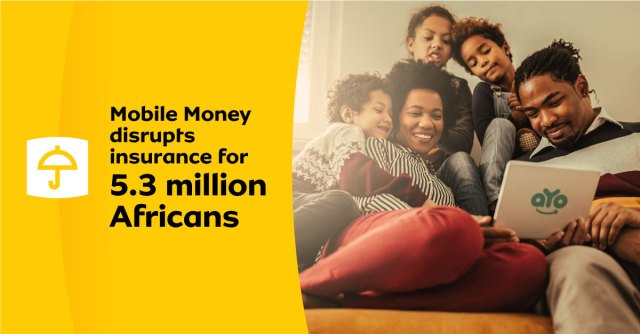
Now that insurance services are more easily available, people in Africa are ready and willing to take out a policy. The PwC report describes insurance penetration in Africa as among the lowest in the world, but now that insurance is mobile, this reality is set to change.
aYo offers MTN Mobile Money users and subscribers hospital cover and life insurance. Users dial a USSD code in order to begin the registration process, and premiums are
deducted through airtime or mobile money. Cover can be increased at any time and bonus cover can be earned by getting friends and family members to sign up. Policyholders are also prompted to add the details of caretakers – the person who will handle financial affairs and other details in the event of death or hospitalization. Beneficiaries can be added via USSD as well, so the insurers can pay funds out correctly.
An article in The Africa Report describes Ghana as among the fastest-growing Mobile Money markets in sub-Saharan Africa, and the country for other territories like Nigeria to look to when it comes to insurance penetration. Regulators and Ghanaian government have encouraged an increase in mobile insurance products for citizens over the years, and the country’s central bank reworked the regulatory framework for mobile money to allow operators to run services through existing subsidiaries. Ghana is providing an example for the rest of Africa which showcases how well financial services and mobile technology can work together.
As is the case with most traditional industries, insurance is not immune to disruption. By partnering with innovators and applying a mobile-first approach, insurance companies can successfully penetrate the African market. The population of Africa is, therefore, more likely to take advantage of financial services and plan for a bright future.