

















Empowering educators to protect and inspire Uganda’s next generation of digital citizens


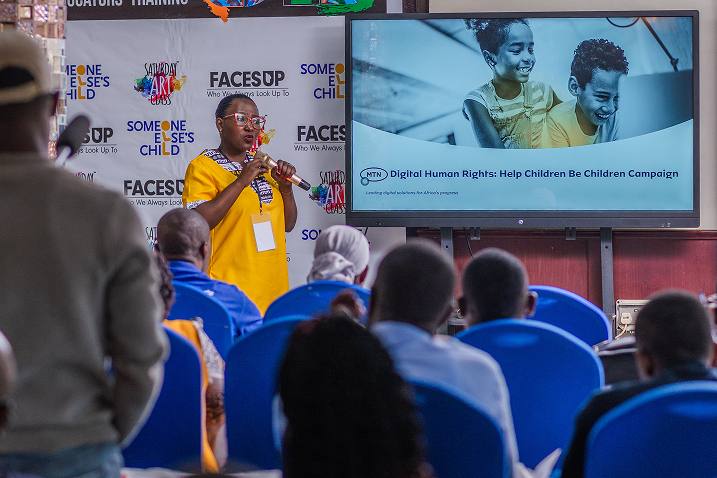
Uganda’s rapidly digitising education landscape continues to widen the gap between children’s growing online exposure and teachers’ ability to protect them in digital spaces. Many primary school educators lack the confidence and practical skills to address risks such as cyberbullying, harmful content, data misuse and unsafe digital behaviour. MTN Uganda saw the need and developed a program to equip frontline educators with practical competencies to uphold digital human rights and foster responsible digital citizenship from an early age, in line with MTN’s Ambition 2025 strategy and SDGs 4, 9, 10 and 16.
What we did
MTN Uganda partnered with Faces Up Uganda to integrate a digital human rights module into the Art for Educators Program. A one-day, skills-based workshop was delivered to 30 primary school teachers in Rubaga Division, Kampala, focusing on recognising online risks, protecting children’s privacy, embedding online safety into lessons and supporting learners who experience harm. MTN provided funding, digital safety materials and technical guidance, while Faces Up Uganda contributed its arts-based pedagogy and facilitation expertise.
Outcomes and impact
Thirty teachers were trained, each expected to reach approximately 2 000 learners annually with improved guidance on safe and responsible internet use. Teachers reported greater confidence in identifying cyber risks and integrating digital safety into routine lessons. Schools showed early shifts towards more responsible device use and stronger engagement with parents on online safety, strengthening community awareness and rights-respecting practices.
Lessons learnt
Teachers need continuous support to keep pace with evolving online risks. Integrating digital safety into an existing, trusted programme proved more effective than standalone training. Lasting impact depends on engaging the wider ecosystem around the child, including parents and school leadership, while partnerships between business and civil society enable scalable, practical models for child online protection.