











Category: Media releases
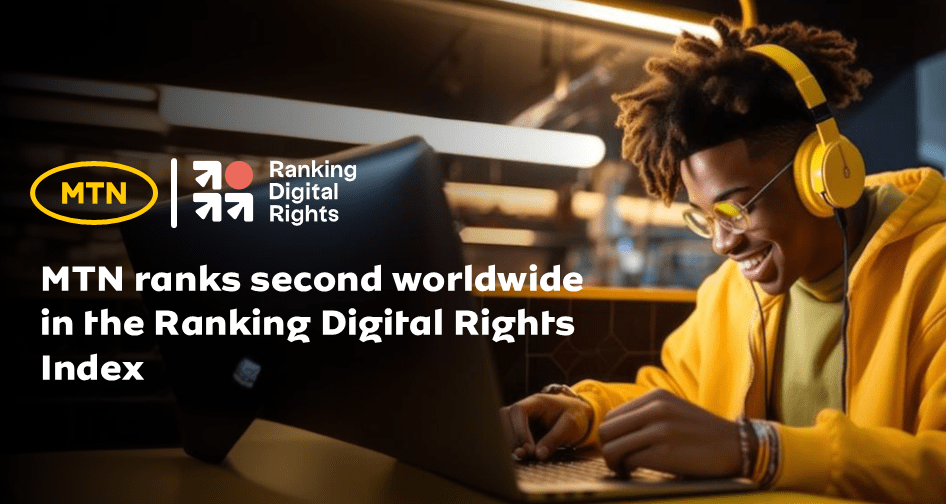
MTN Group, Africa’s largest telecommunications operator, ranks second globally in the 2026 Ranking Digital Rights Index – becoming the first telecommunications company headquartered in an emerging market to place among the top three performers worldwide.
This achievement marks a significant milestone in the Group’s efforts to strengthen transparency, governance and the protection of digital rights for citizens across its markets.
The RDR Index is widely regarded as a global benchmark for corporate accountability in the technology and telecommunications sector, evaluating how companies uphold fundamental human rights, including freedom of expression and privacy, through their policies, governance frameworks and public disclosures.
Against this global backdrop, MTN achieved a score of 42 out of 100, sustaining a strong momentum in improving transparency this assessment cycle. MTN climbed from sixth place in the previous ranking to second place.
Commenting on the Group’s performance, Nompilo Morafo, MTN Group Chief Sustainability and Corporate Affairs Officer, said: “Our progress in the Ranking Digital Rights Index reflects the deliberate steps we have taken to strengthen governance, enhance transparency and embed respect for digital human rights across our operations.”
MTN’s gains were driven by score increases across all three RDR categories marked by strengthened governance disclosures, the introduction of a comprehensive advertising content policy, and enhanced measures related to user data protection.
“Our journey on digital rights has been one of continuous evolution. As the landscape changes, we are deliberately adapting our approach, drawing on lessons from our experiences across markets and strengthening how we translate commitments into practical action,” Morafo added.
As Africa’s leading digital platform, MTN operates across diverse and complex regulatory environments, where balancing digital inclusion and human rights considerations is increasingly critical.
The company remains committed to strengthening transparency and disclosure practices, embedding digital human rights across all markets, enhancing governance and accountability mechanisms, and aligning with evolving global standards and stakeholder expectations.
“While we are encouraged by this progress, protecting digital rights is an ongoing responsibility,” Morafo said “We will continue refining our approach to address emerging risks and ensure our customers remain at the centre of how we operate”, she concluded.
As digital connectivity continues to expand, the Group will continue to play a leading role in ensuring that the benefits of a modern connected life are delivered responsibly, ethically and inclusively.
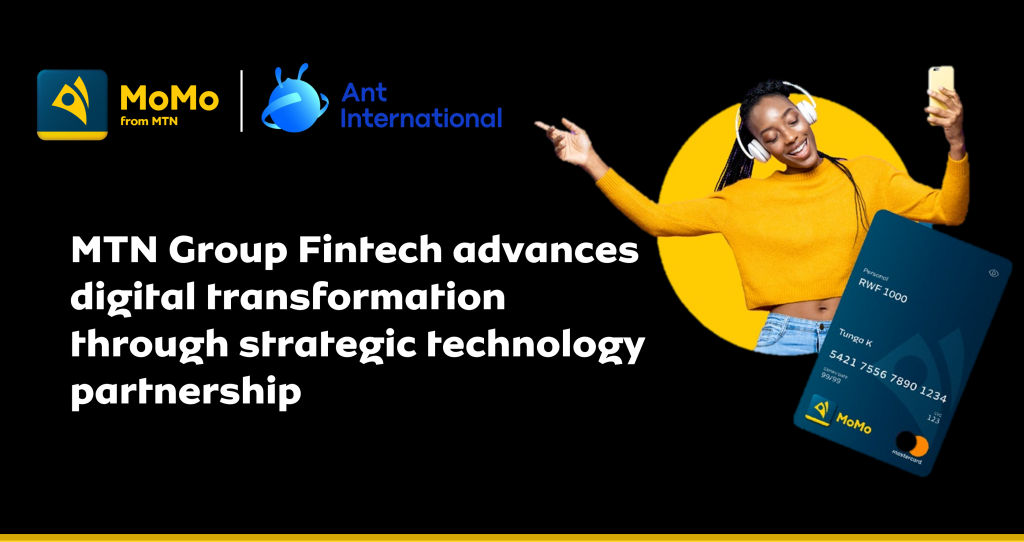
MTN Group Fintech has entered into a strategic partnership with Ant International, a leading global digital payment, digitisation and financial technology provider, to accelerate the transformation of its mobile money ecosystem.
The partnership, which is expected to launch in Nigeria next quarter, will introduce a super-app platform designed to enhance user experience, deepen digital inclusion and enable a next-generation ecosystem for digital finance, lifestyle and commerce services around MoMo.
By leveraging Ant International’s advanced technology, MTN is evolving MoMo to enable stronger ecosystem integration through a mini app platform, enhanced fraud prevention and richer engagement features for consumers and merchants. The partnership represents a major step in building a more resilient and future-ready digital ecosystem.
“This partnership aligns with MTN Group’s ambition of leading digital solutions for Africa’s progress by leveraging scale, technology and strong global partnerships,” said MTN Group President and CEO Ralph Mupita. “It reflects our commitment to transforming the customer experience at scale by delivering a more seamless, secure and intuitive MoMo platform that advances digital inclusion and expands economic participation.”
Douglas Feagin, President of Ant International, added: “We are proud to support MTN Group Fintech in advancing its transformation journey. By combining MTN’s deep market insight with our advanced technology capabilities, we aim to help create a more inclusive, secure and scalable digital financial services environment that benefits both consumers and merchants in-country.”
MTN Group Fintech CEO Serigne Dioum said: “This partnership marks an important milestone in our ambition to help shape Africa’s digital financial future through our One Big Tech strategy.”
The transformation is expected to significantly enhance the MoMo experience in Nigeria by enabling faster transactions, improved reliability and greater integration across financial and commerce services. Customers will benefit from a more intuitive and responsive application that supports payments, savings and value-added services within a unified digital environment.
Beyond improving everyday financial interactions, the initiative reinforces MTN Group Fintech’s commitment to advancing digital inclusion and economic empowerment in Sub-Saharan Africa, identified by the GSMA as the world’s most active mobile money region.
This transformation strengthens MTN Group Fintech’s position to help shape the future of digital finance by delivering accessible, intelligent and trusted financial services that support inclusive growth across the continent.

MTN Group has begun rolling out MTN One TV, a new entertainment proposition designed to make digital video content more accessible, relevant, and flexible for customers across African markets. Introduced in line with MTN’s Ambition 2030 strategy, MTN One TV brings together local storytelling, live channels, international programming, and market-specific viewing options tailored to how customers across the continent access and pay for digital entertainment.
The proposition is designed to give customers greater choice in how they watch content, with viewing models that may vary by market and can include free-to-view content, advertising-funded experiences, pay-as-you-watch access, and subscription offerings. Depending on local availability, customers may also be able to pay through airtime, Mobile Money, and other locally supported payment methods, helping to reduce common barriers to streaming access.
Beyond enhancing customer experiences, MTN One TV creates new opportunities for African creators, broadcasters, advertisers, and ecosystem partners by helping connect content to wider audiences through MTN’s scale across connectivity, payments, and digital services. By bringing together a broad mix of content experiences under a single proposition, MTN aims to support greater content discovery, broader audience reach, and sustainable growth across Africa’s digital entertainment ecosystem.
Anchored in MTN’s strategic platforms of Connectivity, Fintech, and Digital Infrastructure, MTN One TV forms part of the Group’s broader ambition to build digital experiences that create value for customers while enabling participation and growth across Africa’s digital economy.
“Entertainment is increasingly becoming an important gateway to digital participation,” said Selorm Adadevoh, MTN Group Chief Commercial, Strategy and Transformation Officer. “Through MTN One TV, we are leveraging the scale of our connectivity, fintech, and digital capabilities to make relevant content more accessible while creating new opportunities for Africa’s creative and digital economies. This is aligned with our ambition to deliver digital solutions for Africa’s progress.”
MTN One TV is being introduced progressively across MTN markets through a phased rollout approach that reflects local market needs, existing services, and partnership opportunities. Over time, MTN will bring together a combination of video capabilities, content partnerships, and customer experiences under the MTN One TV brand to create a more consistent and scalable entertainment proposition across its footprint.
Through MTN One TV, MTN continues to extend its role beyond connectivity by combining entertainment, payments, and digital services to deliver experiences tailored to the needs of African consumers. The rollout supports MTN’s Ambition 2030 vision of leading digital solutions for Africa’s progress while expanding access to digital entertainment across the continent.
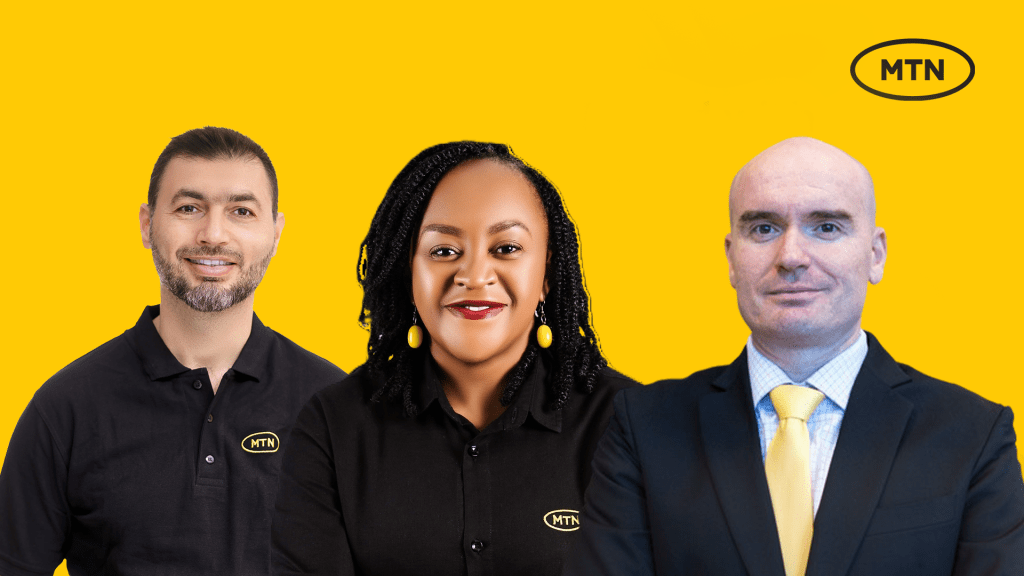
Ahead of the retirement later this year of Paul Norman, MTN Group is pleased to announce the appointment of Mitwa Ng’ambi as the MTN Group Chief People and Culture Officer, joining the Group Executive Committee no later than 1 September 2026. We also announce changes to the leadership of subsidiaries MTN Côte d’Ivoire and MTN Zambia.
“Mitwa will lead MTN’s people and culture agenda at a pivotal time in our Ambition 2030 journey,” said MTN Group President and CEO Ralph Mupita. “She will take the reins from Paul, who will retire after a stellar career at MTN and having made a significant contribution to the business over almost three decades. “
Mitwa is currently CEO of MTN Côte d’Ivoire. She will be succeeded by Abbad Reda, who is the CEO of MTN Zambia. Abbad, in turn, will be succeeded by Larry Annetts. Larry’s last role was as Chief Marketing Officer and Chief Commercial Officer seconded to Irancell.
All new CEO appointments are effective no later than 1 September 2026.
“I would like to congratulate Mitwa, Abbad and Larry on their appointments and wish them well in their work to deliver on our strategic ambition under Ambition 2030,” said Mupita. “Paul has made an invaluable contribution to MTN success, and we will have an opportunity to thank him and celebrate this in the second half.”
Earlier this year, MTN Group adopted a refreshed strategy for the next five years: Ambition 2030. It reflects confidence in the enduring structural growth opportunities in extending digital and financial inclusion across Africa. Making these appointments from internal candidates talks to the depth of talent we have within the Group, and the effectiveness of our succession planning processes.
Mitwa brings to the Group more than 15 years of leadership experience in African telecoms, gained in roles in Zambia, Benin, Senegal, Ghana, Rwanda, Cameroon and Côte d’Ivoire. She previously served as CEO of MTN Cameroon, MTN Rwanda, Airtel Tigo Ghana and Tigo Senegal. In this time, she has led business turnarounds; organisational restructuring; market repositioning; merger integration; and digital and AI-related transformation initiatives.
Apart from his role as CEO of MTN Zambia, Abbad’s other senior positions include at MTN Afghanistan, MTN Liberia and MTN Ghana. Abbad is a highly skilled executive with a proven track record of turning around operations, fostering innovations and surpassing targets. A customer champion, he is a key contributor in improving customer experiences and is seasoned executive with a track record for delivering market share, revenue, and profit growth.
Larry’s career at MTN spans over 29 years, during which he has driven commercial growth, digital transformation and product innovation across diverse markets. In addition to his Irancell secondment, he also previously worked at Group subsidiaries, including MTN South Africa and MTN Nigeria, where he was recognised for delivering transformative results through a customer-centric approach and disciplined execution.
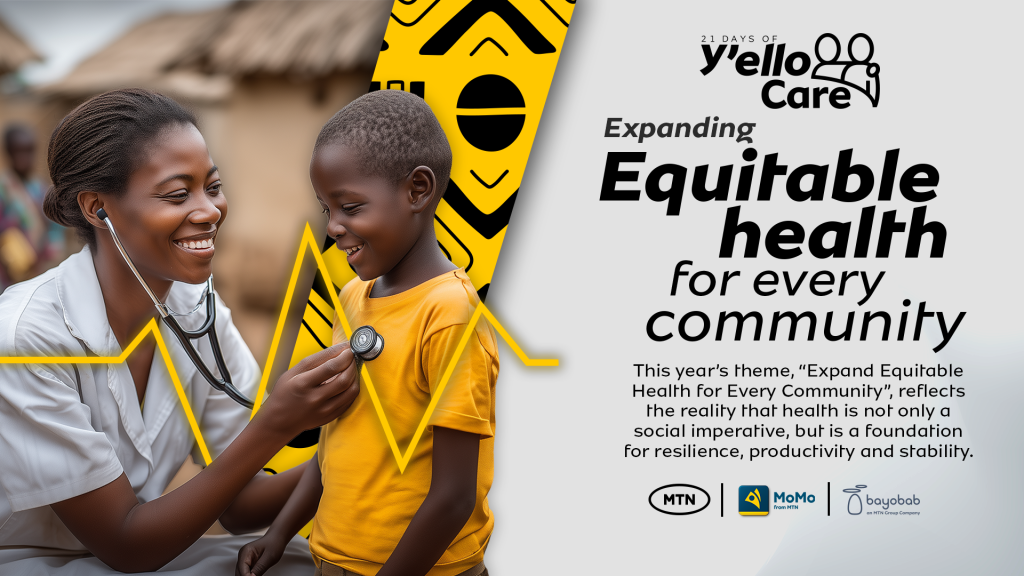
MTN Group is pleased to announce the 2026 edition of 21 Days of Y’ello Care, our flagship employee volunteerism campaign, taking place from 1 to 21 June 2026.
Now in its 19th year, Y’ello Care demonstrates the power of employee-led action in driving meaningful impact across the communities we serve. Since its inception, the campaign has mobilised thousands of MTN employees to support initiatives from education and healthcare to youth development and economic empowerment.
Each year, the campaign responds to the most pressing needs of our communities, guided by our purpose of leading digital solutions for Africa’s progress.
This year’s theme, “Expand Equitable Health for Every Community”, reflects the reality that health is not only a social imperative, but is a foundation for resilience, productivity and stability. It is also fundamental to inclusive economic growth.
This has become more urgent following the outbreak in the Democratic Republic of the Congo and Uganda of the Bundibugyo strain of Ebola. This strain has no licensed vaccine or specific treatment. The outbreak highlights the need for stronger preparedness and surveillance. It also underscores the requirement for greater community trust and more robust frontline health systems.
“Health risks do not stop at borders. This reminds us that Africa’s future will be shaped by our ability to act together early, decisively, and at scale,” says MTN Group Chief Sustainability and Corporate Affairs Officer Nompilo Morafo.
Structural healthcare challenges remain significant across the continent, which carries approximately 25% of the global disease burden but has only 3% of the world’s health workforce. The greatest access gaps are in rural and underserved communities[1], disproportionately affecting women, children and vulnerable populations.
Equitable access to healthcare is critical to enabling full participation in social and economic progress. For MTN, it is also directly linked to expanding dignity and opportunity.
Across MTN’s markets during Y’ello Care 2026, employees and partners will implement practical community-led initiatives to expand access to preventative, primary and responsive healthcare. These interventions will leverage MTN’s connectivity, digital platforms, and partnerships to scale access and strengthen long-term health system resilience.
Among our planned activities are mobile clinics; community outreach programmes; digital health education; telemedicine-enabled services; screening and prevention initiatives; and the use of data and digital tools to enhance service delivery.
Digital technologies – including AI and data analytics – strengthen healthcare systems by improving diagnostics and clinical decision-making, as well as access to care. They can enhance outcomes, improve quality-adjusted life years, and support disease surveillance and outbreak response[2]. At scale, they could unlock US$200–360 billion in global healthcare savings through greater efficiency[3].
“From AI-enabled diagnostics and disease surveillance to telemedicine and data-driven decision-making, digital innovation gives us a powerful opportunity to extend quality healthcare to underserved communities,” says Morafo. “It also enables improved access, outcomes and system resilience.”
Over the past six years, Y’ello Care has reached more than 107 000 people through the efforts of over 14 000 volunteers, contributing over 56 000 hours of community engagement. These build on MTN’s broader contribution to Africa’s progress, including the connectivity and platforms that extend digital and financial inclusion, as well as the investment in infrastructure, technologies and people that support innovation and growth.
For more information about 21 Days of Y’ello Care and MTN’s commitment to social development, please visit MTN Group or follow MTN Group on social media.
[1] McKinsey and Africa CDC
[2] World Health Organization
[3] McKinsey
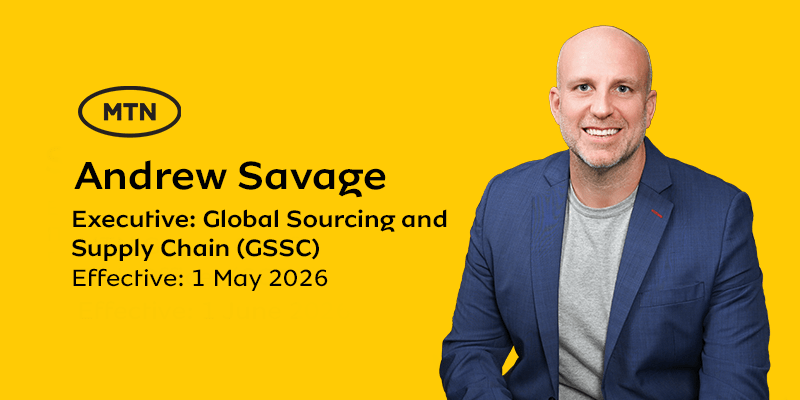
MTN Group today announced the appointment of Andrew Savage as Executive: Global Sourcing and Supply Chain (GSSC), effective 1 May 2026.
Andrew brings more than two decades of global sourcing and supply chain leadership experience. He has played a key role in MTN’s procurement transformation journey, most recently leading the Group’s Procurement Excellence function and providing executive oversight of the GSSC function in an acting capacity.
Over the years, Andrew has led several strategic initiatives across MTN’s markets, including the digitalisation of procurement processes, operating model transformation and the advancement of sustainable value creation across the Group’s procurement ecosystem.
Congratulating him on his appointment, Tsholofelo Molefe, MTN Group Chief Financial Officer, said: “I am confident that under his leadership, procurement and supply chain will continue to be a key strategic enabler for MTN.“
In his new role, Andrew will lead MTN’s global sourcing and supply chain operations, with a mandate to build a resilient, agile and integrated supply chain that supports the Group’s strategy, strengthens value creation and accelerates digital and sustainable procurement practices.
He is recognised for a collaborative and people-centred leadership style, and for his ability to connect people, processes and technology to deliver measurable impact.
For the attention of the Editor, My Broadband
MTN is dismayed to read the headline of My Broadband’s latest article, written by Hanno Labuschagne (29 April 2026 ‘MTN South Africa CEO paid R18 million for two months’ work’), which is misleading.
The figure quoted represents MTN SA CEO Ferdi Moolman’s total remuneration – not simply salary paid – and most of it accrued over three years. We request that you correct the My Broadband headline without delay.
In line with reporting requirements, every year in our Integrated Report MTN Group details the single-figure remuneration for executive directors and prescribed officers. Ferdi Moolman is a prescribed officer.
As your article says in paragraph five, the bulk of this remuneration consists of long-term incentives (LTIs) – or the value of shares that have been allocated to executives as part of their remuneration.
LTIs made up more than R14 million of the total remuneration attributed to Ferdi Moolman in 2025.
The LTI awards at MTN are based on performance, with key performance indicators (KPIs) linked to MTN’s strategic priorities measured over a three-year period.
On page 29 of our 2025 Remuneration Report, we give details of the KPIs related to the December 2022 award – which vested in December 2025. As a participant in the MTN Group LTI scheme, Ferdi Moolman’s LTI benefit as shown on page 35 of the Remuneration Report reflects this three-year performance achievement.
The LTI that vested represents value generated through the appreciation of the MTN Group share price over the past three years.
MTN requests a correction to your headline, making clear that Ferdi was not paid R18 million for the two months that he was CEO of MTN SA. His earnings, including benefits, were worth R1.93 million in that time. In addition, he was awarded a short-term incentive (STI). The value of his LTI was R14.1 million.
ENDS.
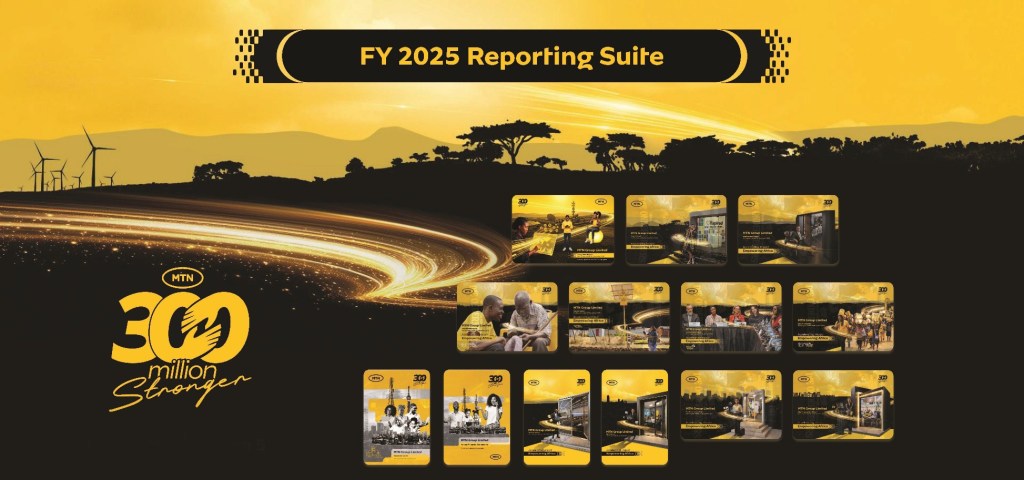
MTN Group announces the release of our annual reports for 2025. Produced under the theme of ‘Accelerating impact. Empowering Africa’, the suite of 13 reports provides a comprehensive review of strong delivery in our work of leading digital solutions for Africa’s progress.
“In the context of complex and often challenging geopolitical and operating conditions, 2025 was a year of numerous MTN milestones, which were achieved with the support of our many different stakeholders,” says MTN Group President and CEO Ralph Mupita. “We invite you to read our 2025 reports, which strive to provide meaningful information tailored for numerous distinct audiences.”
Our flagship Integrated Report tells the overall MTN value-creation story, detailing our strategic achievements and evolution. It unpacks MTN’s excellent commercial momentum in our key markets and broader positive contribution across other markets in 2025. It details sustained growth in data and fintech, disciplined execution, focus on driving leading customer experience, and continued investment in network quality in the year.
Reflecting integrated thinking at the Group, this information helps our investor community and other stakeholders better understand the Group’s overall health and prospects. It is published alongside sustainability, financial and people reports as well as other important information for our shareholders.
By extending digital and financial inclusion, we drive economic growth and create value that gives Africans hope, dignity and opportunity. In our Sustainability Report you will find details of our progress against our shared value key performance indicators. These show how we are building a more resilient organisation, environment and society.
The regulatory landscape and compliance requirements in our industry and markets remain complex and dynamic. As a responsible and compliant corporate citizen, we publish the annual Tax Transparency Report. Key to our licence to operate, it shows that our total tax contribution to tax authorities across our markets reached R61.1 billion in the year.
In a competitive environment for digital talent, MTN needs future-fit skills to deliver on our purpose. Our People Report shines a light on our resilient and adaptable people and values-based culture. It also unpacks our progress in navigating the shifts in the nature of work and the workplace in a world where AI has the potential to fundamentally transform both.
“As digital infrastructure becomes ever more central to economic participation, democratic life and social cohesion, the role of telecoms providers is no longer neutral,” says Mupita in a foreword to our annual Transparency Report. “Connectivity shapes power, access and opportunity. Our responsibility – as shown in this report – is to ensure this power is exercised with integrity and respect for digital human rights.”
Africa is facing increasing climate impacts alongside energy constraints that challenge the pace of decarbonisation. Our Climate Report sets out how we progressed from defining our climate ambition to embedding it into delivery in 2025. It also shows how we surpassed our emissions reduction target in the year, cutting scope 1 and 2 emissions by 48% off a 2021 baseline.
The suite of annual reports also includes a Notice of Annual General Meeting, which invites our shareholders to participate in our virtual meeting on 29 May 2026. Our Remuneration Report provides transparent disclosure of the remuneration of our leadership based on performance against strategic priorities.
Our ESG Data Booklet is a convenient resource for those interested in detailed disclosures relating to MTN’s planet, people, ethics and governance matters. As well as relevant statistics, it highlights our policy and position statements on various ESG issues as well as a comprehensive GRI disclosure index.
“MTN’s compelling investment case is underpinned by the growth opportunities arising from the strong structural demand for data and fintech in our markets. We are committed to executing our strategy while creating shared value in our host markets, with sustainability at the core,” concludes Mupita. “We thank our stakeholders for their ongoing support.”
Explore the reports here: https://www.mtn.com/annual-reports/
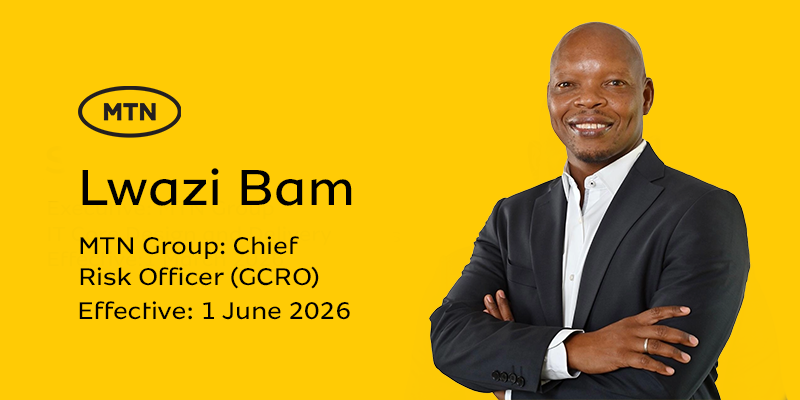
MTN Group is pleased to announce the appointment of Lwazi Bam as Group Chief Risk Officer (GCRO) responsible for leading MTN’s enterprise-wide risk management and compliance functions across the group. In this role, Bam will be a member of the Group’s Executive Committee.
The appointment is effective 1 June 2026 and is part of leadership changes to strengthen the execution and delivery of the Group’s strategy to capture value from the structural growth opportunities brought about by accelerated data adoption and financial inclusion across Africa.
Bam brings with him more than two decades of senior leadership experience, including in risk oversight. He previously served as CEO of Deloitte Africa and Southern Africa, responsible for building and integrating a pan-African business.
“Lwazi Bam joins MTN at an exciting time in our journey, as we embark on our Ambition 2030 strategy,” said MTN Group President and CEO Ralph Mupita.
“He brings with him strong leadership and experience in leading large, complex businesses across multiple markets, combined with a deep understanding of risk, regulatory and governance frameworks. I believe this will stand MTN in good stead as we work to lead digital solutions for Africa’s progress.”
During his time at Deloitte, Bam led complex, multi-jurisdictional operations in highly regulated environments and strengthened risk, governance and capital discipline frameworks across the franchise.
In addition to his executive leadership experience, Bam has served on the boards of major institutions, contributing his expertise in governance, risk oversight and board-level stewardship. He has been a member of risk and audit committees and has worked closely with regulators and supervisory bodies. A chartered accountant by training, his board experience includes Standard Bank Group and Standard Bank South Africa, SAICA, ZEDA Limited, Valterra Platinum and Woolworths.
“I am inspired by the impact MTN Group is making across the continent and excited to be joining a company whose purpose is leading digital solutions for Africa’s progress,” said Bam.
In November 2025, changes to the Exco included GCRO Ferdi Moolman’s appointment as CEO of MTN South Africa.

In line with our purpose of leading digital solutions for Africa’s progress, MTN Group and major subsidiary MTN South Africa each sustained a Level 1 Broad‑Based Black Economic Empowerment (B‑BBEE) contributor status in 2025.
This leading ranking – for the sixth year running for MTN Group and seventh year in a row for MTN SA – is contained in MTN’s annual B-BBEE compliance report compiled by an independent verification agency.
“For MTN, long‑term business success and societal progress are deeply interconnected,” said MTN Group President and CEO Ralph Mupita. “Maintaining a Level 1 B‑BBEE status over many years reflects this.”
B‑BBEE aims to address economic inequalities, expand economic participation and strengthen long‑term resilience in South Africa. MTN’s strategic priority to ‘create shared value’ includes work to drive digital and financial inclusion across our markets, supporting economic development and creating a more connected and equitable Africa.
MTN’s sustained Level 1 performance is underpinned by consistent progress across the scorecard, including strong outcomes in the category of ‘Skills Development’, alongside continued momentum in ‘Enterprise and Supplier Development’ and ‘Socio‑Economic Development’.
Leadership transformation continues to advance at the highest levels of governance – the MTN South Africa and MTN Group Board of Directors. MTN’s investment in skills development also responds directly to South Africa’s pressing need for future‑ready capabilities.
During 2025, MTN supported 492 learnerships, graduate programmes and targeted skills interventions, with a strong focus on digital and technical skills that enhance employability, business sustainability, and participation in the digital economy.
‘Preferential Procurement’ remains a powerful lever for inclusive growth and a key enabler of MTN’s Ambition 2030 strategy. During 2025, MTN spent R8.8 billion with 51% Black‑owned suppliers and R11.6 billion with 30% Black women‑owned suppliers, leveraging our scale to strengthen enterprises, deepen local participation, and stimulate economic ecosystems across the country.
“By using our procurement spend, skills programmes and partnerships to enable real economic participation, MTN South Africa is driving impact that extends well beyond compliance,” said MTN South Africa CEO Ferdi Moolman.
Through the MTN South Africa Foundation, we continue to deliver tangible impact in education and digital inclusion. Initiatives such as the MTN Online School, reaching 905,000 learners, and the MTN Skills Academy, reaching 25 023 beneficiaries, focus on women and youth and support pathways to employability, entrepreneurship and sustained participation in the digital economy.
MTN remains committed to embedding transformation across its entire value chain, ensuring that procurement, skills development, enterprise support, and community initiatives are rooted in local realities. Through this approach, we continue to enable inclusive growth, strengthen economic resilience, and contribute to a more equitable and digitally connected South Africa.